 Save
Save The kitchen was still cool that February morning when I cracked open the first blood orange and watched the jewel-toned juice pool on the cutting board. I'd bought them on impulse at the farmers market, drawn to their crimson flesh and the promise of something different than the same old lemon loaf. My daughter wandered in, still in pajamas, and watched me zest the second one with curiosity. By the time the cake came out of the oven, filling the house with that unmistakable citrus warmth, she'd decided blood oranges were magic.
I brought this cake to a winter potluck where everything else was chocolate or spice-heavy, and it practically glowed on the dessert table. Three people asked for the recipe before we even cut into it. One friend later told me she made it for her book club, and they spent twenty minutes debating whether the color came from food dye or was actually real.
Ingredients
- All-purpose flour: The backbone of the crumb, measured correctly by spooning it into your cup and leveling off, never scooping directly from the bag.
- Baking powder: Make sure yours is fresh, I learned the hard way that old baking powder makes dense, sad cakes.
- Salt: Just a quarter teaspoon balances all that sugar and citrus without making the cake taste salty.
- Plain Greek yogurt: Use full-fat for the richest texture, though 2% works in a pinch if that is what you have.
- Granulated sugar: Whisked with the yogurt until it almost dissolves, creating a base that keeps the cake tender.
- Large eggs: Room temperature eggs blend smoothly without streaking, so pull them out while you preheat the oven.
- Blood orange zest: This is where the fragrance lives, so zest right down to the white pith but not into it.
- Blood orange juice: Freshly squeezed is non-negotiable here, bottled juice just does not have the same brightness.
- Vanilla extract: A teaspoon of the real stuff rounds out the citrus without competing.
- Coconut oil: Melted and cooled so it does not scramble the eggs, it adds moisture and a subtle tropical note.
- Powdered sugar: Sifted for the icing so you do not end up with lumps in that beautiful glaze.
Tired of Takeout? 🥡
Get 10 meals you can make faster than delivery arrives. Seriously.
One email. No spam. Unsubscribe anytime.
Instructions
- Prep Your Pan:
- Butter every corner of that loaf pan and dust it with flour, tapping out the excess, or line it with parchment for foolproof release. I like to leave parchment wings hanging over the sides so I can lift the whole cake out easily.
- Combine the Dry Mix:
- Whisk the flour, baking powder, and salt together in a medium bowl until evenly distributed. Set it aside while you work on the wet ingredients.
- Cream the Yogurt Base:
- In a large bowl, whisk the Greek yogurt and sugar together vigorously until the mixture looks smooth and almost glossy. This takes about a minute of steady whisking.
- Build the Batter:
- Add the eggs one at a time, whisking after each until fully blended, then stir in the blood orange zest, juice, and vanilla. The batter will look a little thin and that is exactly right.
- Fold in the Flour:
- Add the dry ingredients to the wet mixture and fold gently with a spatula just until no white streaks remain. Overmixing now will make the cake tough instead of tender.
- Incorporate the Oil:
- Drizzle the melted coconut oil over the batter and fold it in with smooth, deliberate strokes until it disappears. The batter will turn silky and pourable.
- Bake Until Golden:
- Pour the batter into your prepared pan, smooth the top, and slide it into the oven for 50 minutes. A toothpick should come out with just a few moist crumbs clinging to it.
- Cool Completely:
- Let the cake rest in the pan for 10 minutes, then turn it out onto a wire rack. Patience here is key, icing a warm cake will result in a runny mess.
- Glaze and Finish:
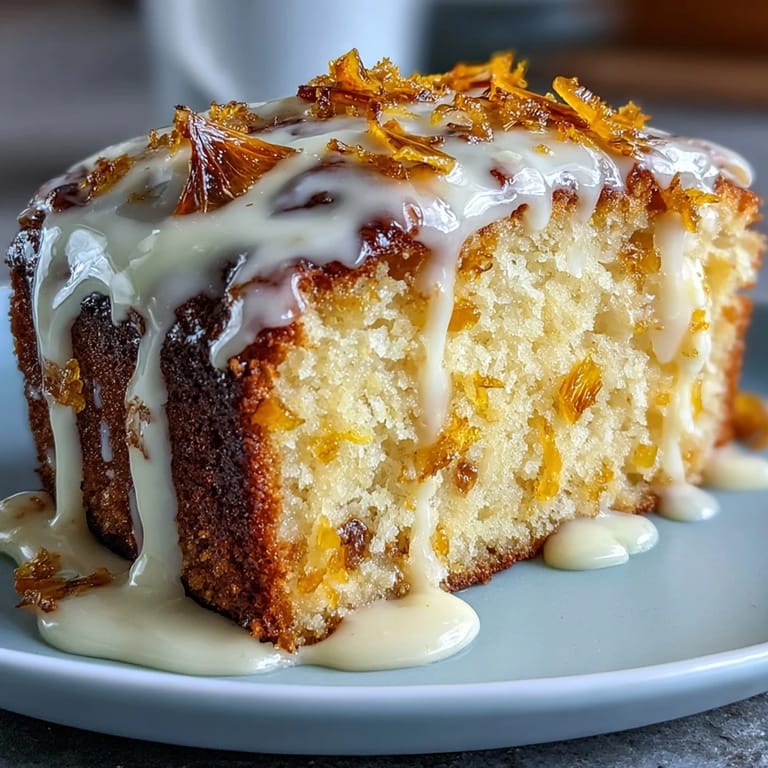
- Whisk the powdered sugar, blood orange juice, and zest until the icing is smooth and pourable like honey. Drizzle it over the cooled cake and let it set for 20 minutes before slicing.
 Save
Save I sliced into this cake on a gray Tuesday afternoon when I needed something beautiful, and that first bite, tender and bright and sweet, felt like a small rebellion against winter. My husband walked by, stole a piece without asking, and twenty minutes later came back to tell me it tasted like sunshine. Sometimes a cake is just a cake, but sometimes it is the thing that shifts your whole day.
Choosing Your Citrus
Blood oranges are only around from December through March, so when you see them, buy extra and make this twice. If you cannot find them, regular oranges work fine but you lose that stunning ruby color and the slightly raspberry-like undertone. I have also tried this with Cara Cara oranges, which gave a peachy-pink hue and a sweeter, less tart flavor that my kids preferred.
Storage and Make-Ahead
This cake actually improves on day two as the flavors meld and the crumb becomes even more tender. Keep it covered loosely with foil at room temperature for up to two days, or wrap it tightly and refrigerate for up to five. I have frozen unfrosted slices wrapped in plastic and foil for up to a month, then thawed them on the counter and added fresh icing.
Serving Suggestions
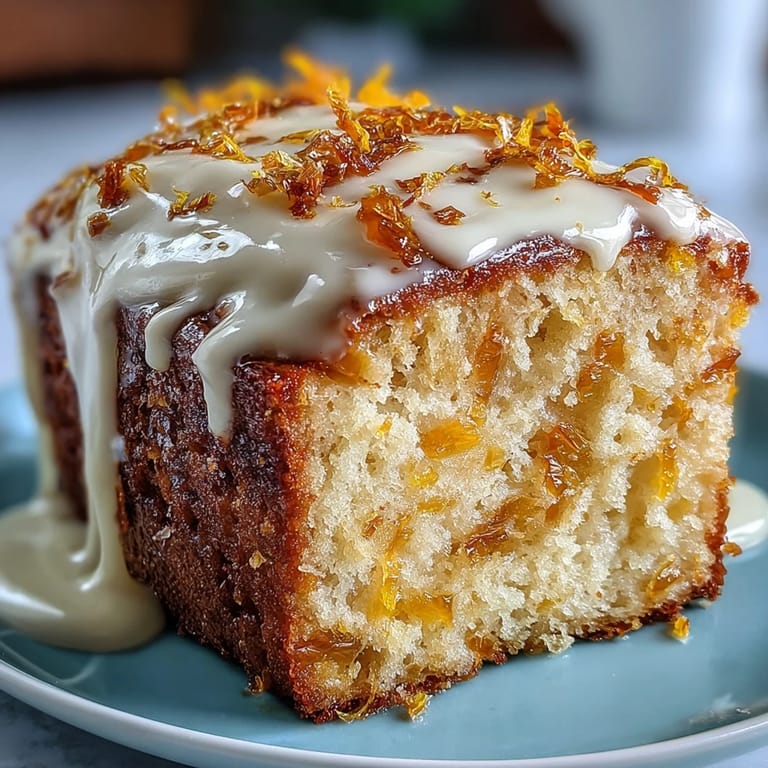
I love this cake as is, but it also shines with a handful of fresh raspberries on the side or a dollop of lightly sweetened whipped cream. For a fancier presentation, I have topped slices with candied blood orange wheels and a sprig of mint. It is equally at home on a weekday breakfast table or a dinner party dessert spread.
- Toast a slice and butter it lightly for an indulgent breakfast treat.
- Serve it with hot tea or cold milk, both pair beautifully with the citrus.
- Try a thin slice alongside vanilla ice cream for contrast in temperature and texture.
 Save
Save This cake has become my answer to winter doldrums and last-minute guest arrivals alike. Keep blood oranges on hand during their short season, and you will always have something special ready to bake.
Recipe FAQs
- → Can I use regular oranges instead of blood oranges?
Yes, you can substitute navel oranges or Valencia oranges for blood oranges. The flavor will be slightly less tart and the vibrant red color won't be as pronounced, but the cake will still be delicious.
- → What makes Greek yogurt special in this cake?
Greek yogurt adds moisture and tenderness to the crumb while providing a subtle tang that complements the citrus flavors. Its thick texture creates a denser, richer cake compared to using regular yogurt.
- → How do I know when the cake is done baking?
Insert a toothpick into the center of the cake—if it comes out clean or with just a few moist crumbs, the cake is ready. The top should be golden brown and spring back lightly when touched.
- → Can I make this cake ahead of time?
Yes, the cake can be baked one day in advance. Wrap it tightly in plastic wrap once cooled. Add the icing just before serving for the freshest appearance and texture.
- → What's the best way to store leftovers?
Store covered at room temperature for up to 2 days, or refrigerate for up to 5 days. Bring refrigerated slices to room temperature before serving for the best texture and flavor.
- → Can I freeze this cake?
Yes, wrap the unfrosted cake tightly in plastic wrap and foil, then freeze for up to 3 months. Thaw overnight at room temperature before adding the icing.