 Save
Save Moving day chaos had finally settled, and my kitchen was still half-unpacked when friends texted asking what time to come celebrate. I realized I had exactly one hour and zero energy for cooking, so I did what any sensible person would do—I built a board so beautiful it looked intentional. The magic of a charcuterie board hit me that afternoon: it requires no heat, no real skill, just an eye for color and permission to stop overthinking.
What I didn't expect that first time was how the board became a conversation starter. People gravitated toward it in clusters, debating which cheese paired better with which cracker, building their own flavor combinations. My neighbor discovered she loved blue cheese and fig together—something she'd never tried before. That's when it clicked: a charcuterie board isn't just food, it's permission for people to play and experiment without pressure.
Ingredients
- Prosciutto (120 g): Fold it loosely into quarters—tight rolls look pinched, but gentle folds feel generous and actually show off the delicate, translucent meat.
- Salami (120 g): A mix of textures beats monotony; go for both thinly sliced and thicker cuts if you can find them.
- Smoked ham (120 g): This bridges the gap between the cured meats and cheese, milder and approachable.
- Chorizo slices (100 g): The spicy one that people remember, so don't skip it even if your crowd seems conservative.
- Brie (150 g): Slice it yourself rather than buying pre-sliced; the texture and presentation are worth the thirty seconds it takes.
- Aged cheddar (150 g): Cut into small cubes so people can grab one without feeling like they're taking a massive chunk.
- Gouda (120 g): Its subtle sweetness balances the sharper cheeses, so position it where it can shine without getting lost.
- Blue cheese (100 g): Crumble it fresh rather than using pre-crumbled if possible; it feels less dusty and more intentional.
- Hummus (100 g): A tahini-based version tastes noticeably better than chickpea-only varieties.
- Tzatziki (100 g): Make it yourself with greek yogurt and fresh dill if you have time; store-bought works, but homemade tastes like someone cared.
- Roasted red pepper dip (100 g): This is the crowd-pleaser dip that even picky eaters reach for.
- Assorted crackers (150 g): Mix textures—water crackers are delicate, multigrain has substance, seeded crackers add visual interest.
- Baguette slices (100 g): Toast them lightly about an hour before serving so they have a subtle crunch without being hard.
- Breadsticks (100 g): They stand up nicely and add vertical dimension to your board.
- Red grapes (1 cup): Leave them in small clusters when you can; it looks more abundant than scattered singles.
- Green grapes (1 cup): The color contrast matters more than you'd think when you're building something meant to catch the eye.
- Cherry tomatoes (1 cup): Halve some and leave others whole; the variation makes it feel less fussy.
- Cucumber slices (1 cup): Cut on a slight angle for a more polished look than straight cuts.
- Red bell pepper (1): Slice into strips rather than rings; strips are easier to grab and pair with dips.
- Baby carrots (1 cup): Leave some whole and cut larger ones in half for visual variety.
- Mixed nuts (½ cup): Toast them lightly in a dry pan for five minutes before adding—it wakes up their flavor dramatically.
- Olives (½ cup): Buy them pitted unless your guests enjoy the hunting game; green and black together look beautiful.
- Dried apricots (¼ cup): These provide sweetness and chew, balancing the savory elements.
- Dried figs (¼ cup): They pair unexpectedly well with cheddar and gouda; people always ask what they are.
- Fresh herbs (rosemary, thyme): Tuck sprigs into gaps and lay a few across the top; they're edible garnish that adds fragrance.
Tired of Takeout? 🥡
Get 10 meals you can make faster than delivery arrives. Seriously.
One email. No spam. Unsubscribe anytime.
Instructions
- Set Your Stage:
- Choose a large, flat surface—wood boards photograph better and feel warmer than ceramic or marble, though any clean, stable surface works. If you're nervous about stains, line it with parchment paper cut to size.
- Anchor With Meats:
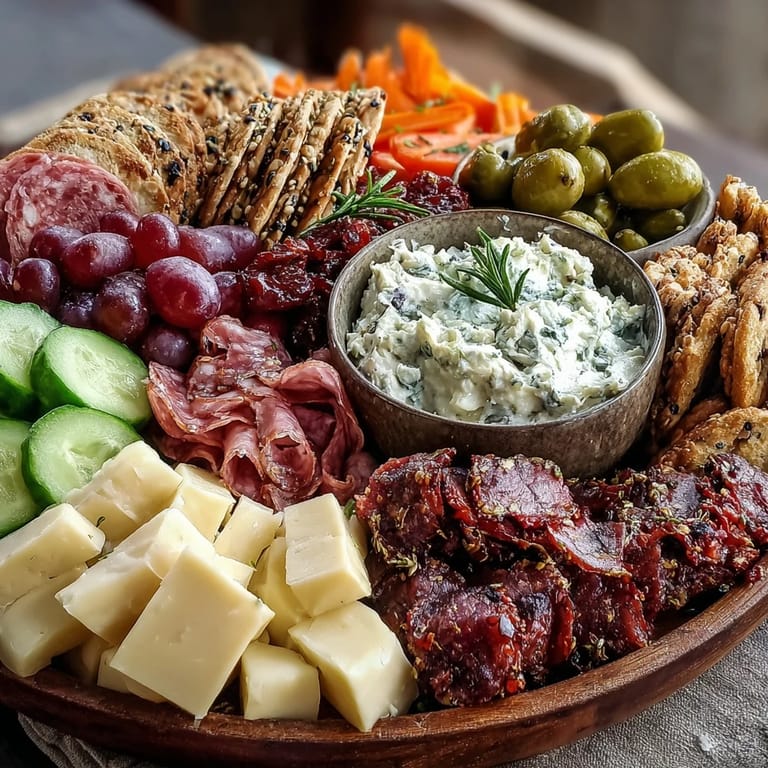
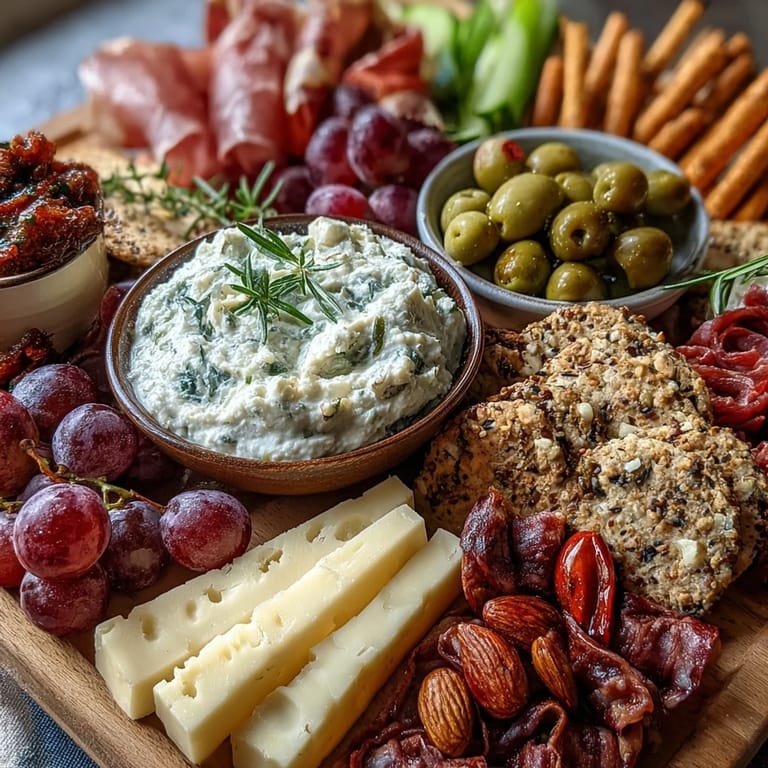
- Arrange prosciutto, salami, smoked ham, and chorizo in loose folds and rolls around the board, leaving roughly one-third of the space empty for everything else. Think of them as anchors that help you visualize the layout before adding the rest.
- Position The Cheeses:
- Place larger pieces of brie and gouda in different zones, cluster the aged cheddar cubes nearby, and scatter blue cheese crumbles in gaps. Vary the spacing so no two cheese types sit directly next to each other.
- Nest The Dips:
- Pour each dip into its own small bowl—white bowls make colorful dips pop, but honestly any small vessel works. Tuck them among the meats and cheeses, leaving room for crackers to surround them.
- Fan Out Crackers And Bread:
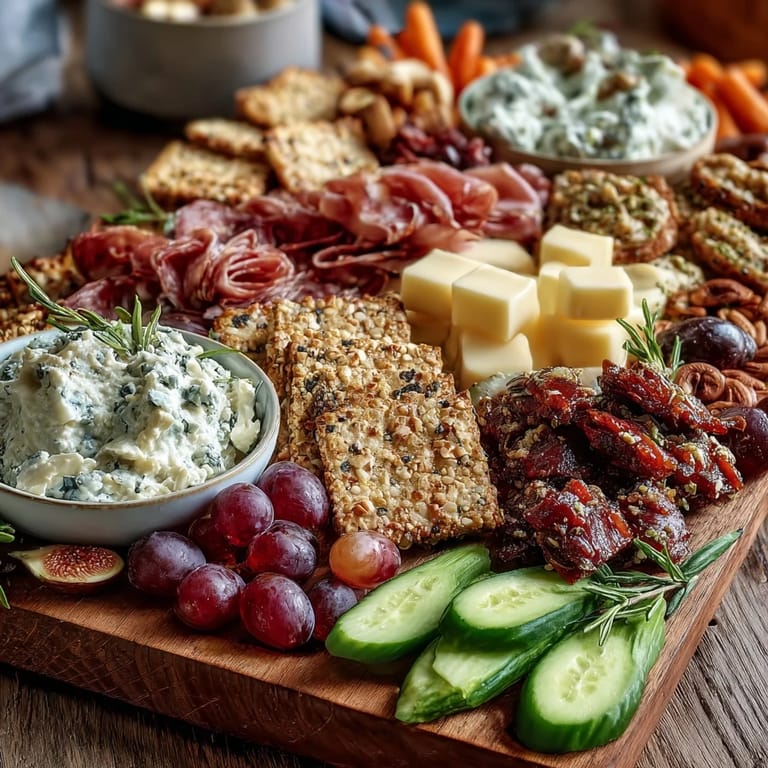
- Arrange crackers in loose, overlapping rows. Lean baguette slices and breadsticks against each other or stand them upright in clusters for height and visual interest.
- Fill The Gaps With Color:
- Scatter grapes (keep small clusters together), cherry tomatoes, cucumber slices, bell pepper strips, and carrots in any remaining white space. This is where your color story comes together.
- Scatter Finishing Touches:
- Sprinkle mixed nuts, olives, dried apricots, and figs in small clusters rather than spreading them evenly—clustering looks intentional while scattered looks accidental. Tuck fresh herb sprigs into gaps and lay a few across the top surface.
- Step Back And Assess:
- Before guests arrive, look at your board from a distance. If one area feels bare, add more herbs or fruit. If it feels crowded, remove a handful of items. You want it to look abundant but not suffocating.
 Save
Save My host friend texted me the next day saying guests were still talking about how the board made everyone feel like they belonged at the table immediately, no small talk required. There's something about abundance and choice that says you're welcome here without needing to say it out loud.
Timing And Prep Strategy
Build your board no more than an hour before guests arrive if possible—this keeps cheeses at their best texture and crackers from absorbing humidity and getting soft. The night before, you can slice cheeses, cut vegetables, and portion dips into their bowls, then cover everything tightly and refrigerate. Thirty minutes before people arrive, pull the dips and meats from the fridge and do your assembly. This way you're not stressed and everything tastes fresh.
Wine And Pairing Thoughts
A crisp white wine—sauvignon blanc, pinot grigio, or even a dry riesling—cuts through the richness of cured meats and soft cheese. If your crowd leans red, a light pinot noir or young cabernet works beautifully without overpowering. The rule I've learned is that the wine should feel refreshing rather than heavy, since people will be grazing and drinking simultaneously.
Customizing For Your Crowd
The ingredients I listed work as a template, not a rulebook. Allergies, dietary preferences, and regional availability all matter, so swap freely. I've made boards with all vegetarian cheeses for vegan friends, added spicy peppers for lovers of heat, and skipped the nuts entirely for someone with allergies. The structure stays the same; only the players change. One last note: if you're feeding people with gluten sensitivity, stock extra vegetables and fruit, and source gluten-free crackers so they have plenty of dipping options.
- Buy pre-sliced ingredients only if your schedule is genuinely impossible; they cost more and look less elegant.
- Odd numbers look better than even ones, so aim for three types of each ingredient category rather than two or four.
- Leftover ingredients make perfect next-day snacks, so don't stress about waste.
 Save
Save A charcuterie board is just an excuse to say you've been thinking about your guests and want them to feel at home. Everything else—the aesthetics, the flavors, the abundance—flows from that intention.
Recipe FAQs
- → How should I arrange the meats and cheeses?
Arrange cured meats in loose folds or rolls for easy picking. Place cheeses spaced around the board for easy access and variety.
- → What dips pair well with this board?
Hummus, tzatziki, and roasted red pepper dip complement the meats and cheeses with creamy and tangy flavors.
- → Can I substitute any ingredients for dietary needs?
Yes, you can swap meats or cheeses to accommodate preferences and use gluten-free crackers if needed.
- → How can I enhance the board’s presentation?
Garnish with fresh herbs like rosemary and thyme, and arrange nuts and dried fruits in small clusters for visual appeal.
- → What beverages pair best with this selection?
A crisp white wine or a light red wine pairs perfectly with the rich flavors and textures on the board.