 Save
Save There's something about the smell of sesame oil hitting a hot wok that instantly transports me to late nights in tiny noodle shops, except now I'm making it at home on a Tuesday after work. My neighbor swore by this bowl concept, and after she left a container at my door one evening, I became obsessed with recreating it. The balance of that savory-sweet sauce with fresh vegetables and tender chicken felt like the answer to every "what's for dinner" crisis. Now it's the first thing I turn to when I want something that tastes impressive but doesn't require hours of fussing.
I made this for my partner when they'd had the worst day imaginable, and watching their face brighten when they tasted that first bite taught me that food really does heal. They asked for it three times the following week, and suddenly it became our bowl, our thing. That's when I knew this recipe had staying power.
Ingredients
- Boneless, skinless chicken breast or thighs (500 g): Thighs are more forgiving and stay juicier, but breasts work fine if you don't overcook them; slice everything the same thickness so it cooks evenly.
- Tamari or low-sodium soy sauce (3 tbsp): Tamari is gluten-free and slightly richer, but regular soy sauce works just as well if that's what you have.
- Fish sauce (1 tbsp): This ingredient sounds intimidating, but trust it—it adds a savory depth that makes the whole bowl sing without tasting fishy.
- Rice vinegar (2 tbsp): The acid cuts through the richness and brightens everything; don't skip it or substitute with regular vinegar, which tastes too harsh.
- Honey (1½ tbsp): A touch of sweetness balances the salty and sour notes; maple syrup works in a pinch.
- Toasted sesame oil (2 tbsp): This is essential and non-negotiable—regular sesame oil tastes bland and bottled in comparison, so seek out the toasted version.
- Neutral oil like canola or sunflower (2 tbsp): Keeps the sauce smooth and prevents the sesame oil from overwhelming the palate.
- Garlic and ginger (3 cloves minced garlic, 1 tsp grated ginger): Fresh is always better, and ginger adds a subtle warmth that makes the dish feel complete.
- Rice noodles (250 g): They're delicate and absorb the sauce beautifully; wheat noodles are sturdier if you prefer something heartier.
- Fresh vegetables (carrot, cucumber, bell pepper, spring onions, bean sprouts): The colors matter here—it's not just pretty, it means you've got a range of textures and flavors working together.
- Fresh cilantro (2 tbsp chopped): Adds a bright, herbaceous note that ties everything together at the end.
- Toasted sesame seeds and lime wedges: The sesame seeds add crunch and nuttiness, while lime juice is the final wake-up call that brings all the flavors into focus.
Tired of Takeout? 🥡
Get 10 meals you can make faster than delivery arrives. Seriously.
One email. No spam. Unsubscribe anytime.
Instructions
- Make the magic sauce:
- Whisk tamari, fish sauce, rice vinegar, honey, sesame oil, neutral oil, minced garlic, and ginger together in a bowl until the honey dissolves completely. Split the sauce in half—one portion marinates the chicken, the other becomes your finishing sauce.
- Marinate the chicken:
- Toss your sliced chicken with half the sauce and let it sit for 15 minutes; this isn't a long marination, but it's enough to infuse flavor and keep the meat tender.
- Cook the noodles:
- Follow the package instructions, but aim for tender with a slight bite—you don't want mushy noodles. Drain, rinse with cold water, and toss gently so they don't clump.
- Sear the chicken:
- Heat your skillet or wok over medium-high heat until it's almost smoking, then add the marinated chicken in a single layer. Don't crowd the pan—let it sit for a minute to get those beautiful golden edges before stirring, about 5 to 7 minutes total until it's cooked through and the edges are caramelized.
- Build your bowls:
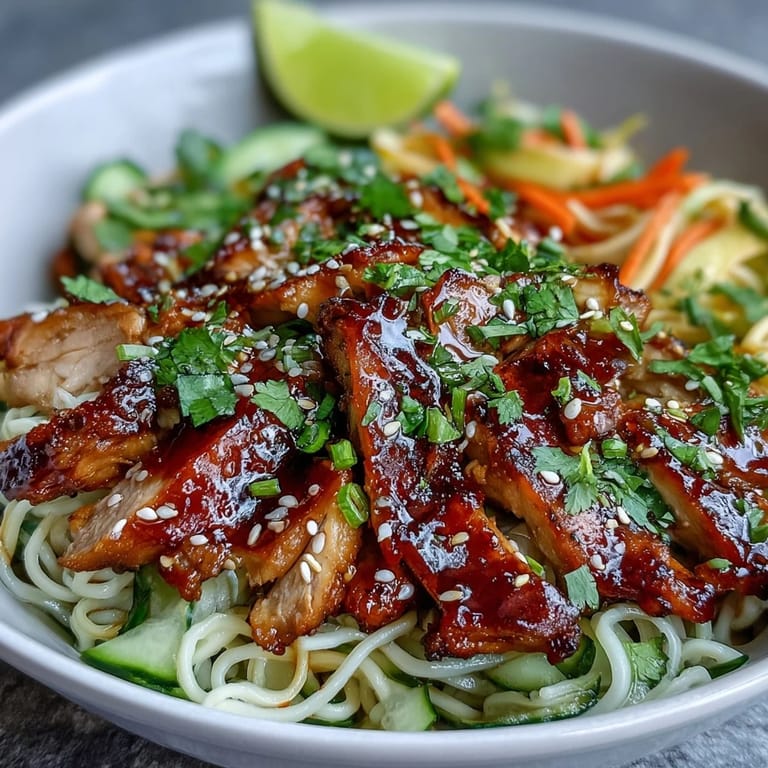
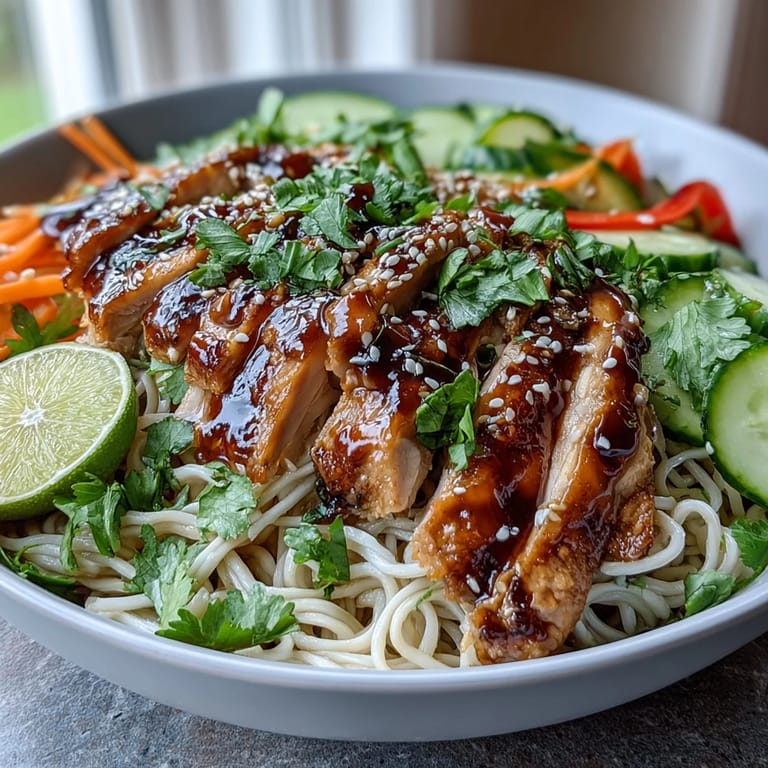
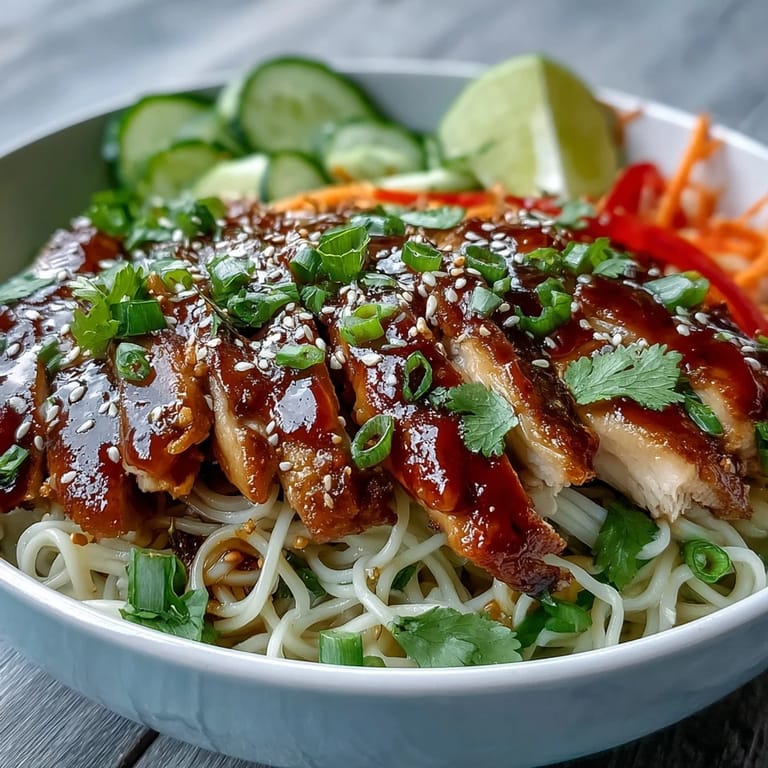
- Divide the cooled noodles among four bowls, then arrange the cooked chicken and all your fresh vegetables on top in neat little piles. It sounds precious, but it actually makes a difference when you can see and taste distinct flavors with each bite.
- Finish with a flourish:
- Drizzle the reserved sauce over each bowl, then top with fresh cilantro, toasted sesame seeds, and a generous squeeze of lime juice. Taste one bite before serving—you might want extra lime or heat, and that's the beauty of finishing at the table.
 Save
Save Last month, I made six of these bowls for friends gathering at my place, and nobody touched their phones during dinner. Everyone was too busy slurping noodles and swapping vegetables, asking questions about the sauce, laughing at how something so simple could taste so good. That's the moment I realized this recipe had become more than a weeknight dinner—it's a conversation starter.
The Secret to Perfect Chicken
The difference between rubbery chicken and silky chicken comes down to three things: thickness, temperature, and timing. When you slice your chicken, aim for pieces about the thickness of your pinky finger—thick enough to stay tender through cooking, thin enough to cook quickly without drying out. Don't cook it past medium, when it's just barely cooked through; carryover heat will finish the job once you've pulled it from the pan. I learned this the hard way after making several dry batches, and now I use a quick internal temperature check to stay confident.
Vegetable Prep as Meditation
Julienning the carrot and slicing everything thin takes maybe ten minutes with a sharp knife, and honestly, I've started using this time as a brain-clearing moment before dinner service. The repetitive motion is weirdly calming, and by the time all your vegetables are prepped, you're in a different headspace. Plus, thin-sliced vegetables are easier to eat with noodles and they absorb more of the sauce, which is really the whole point.
Sauce Hacks and Customizations
Once you understand the sauce formula, you can play with it endlessly. If you like heat, add a teaspoon of chili flakes or Sriracha to the base, or just keep a bottle on the table so people can adjust their own bowls. For something creamier, whisk in a tablespoon of almond or peanut butter before marinating the chicken. I've made versions with coconut aminos instead of soy sauce, with white miso for umami depth, and even with a splash of apple cider vinegar instead of rice vinegar—each one tastes like a slightly different memory from a different part of the world.
- Protein flexibility: Tofu, shrimp, or beef all work beautifully in this bowl; just adjust the cooking time so nothing becomes tough or overcooked.
- Noodle options: Try buckwheat soba, wheat noodles, or even rice vermicelli depending on what you have and how hungry you are.
- Vegetable abundance: Shredded cabbage, snap peas, edamame, or roasted broccoli can all join the party without changing the fundamental character of the dish.
 Save
Save This bowl is the kind of recipe that gets better the more you make it, not because the instructions change but because you get faster and braver with your tweaks. It's become my answer to "I don't know what to cook," and I hope it becomes yours too.
Recipe FAQs
- → Can I make this dish ahead of time?
Prepare the sauce and marinate chicken up to 24 hours in advance. Cook fresh before serving for best texture and flavor.
- → What noodles work best?
Rice noodles are traditional, but wheat noodles, soba, or even spaghetti make excellent substitutes based on preference.
- → How can I make this vegetarian?
Replace chicken with firm tofu and use vegetarian fish sauce or additional tamari. The preparation remains the same.
- → Can I adjust the spice level?
Add more chili flakes or Sriracha for heat, or omit entirely for a mild version everyone can enjoy.
- → What vegetables can I add?
Snap peas, shredded cabbage, edamame, or bok choy work beautifully. Use whatever fresh vegetables you have available.
- → How long does this keep?
Store components separately in the refrigerator for up to 3 days. Reheat chicken and noodles gently before assembling.