 Save
Save One rainy Tuesday, I was standing in my kitchen staring at a half-empty pantry when my neighbor texted asking if I wanted to grab lunch. Instead, I said no and started pulling together what I had—some chicken, noodles, and a jar of sesame oil that had been hiding in the back. Twenty minutes later, I was eating the most satisfying bowl I'd made in months, and I realized I'd stumbled onto something worth making again and again.
I made this for my sister's book club potluck and watched people go back for seconds without even asking what was in it. Someone asked if I'd ordered it from that new Asian place downtown, and that's when I knew this recipe was a keeper. The whole table smelled like toasted sesame and ginger, and for once, nobody was scrolling through their phones.
Ingredients
- Boneless, skinless chicken breast or thighs (500 g): Thighs stay juicier if you're not careful, but breasts cook faster—slice them thin either way so they cook through in minutes.
- Dried udon, soba, or rice noodles (250 g): Udon gives you a chewy bite, soba brings earthiness, rice noodles keep it light—pick based on your mood.
- Red bell pepper (1), thinly sliced: The sweetness plays against the savory sauce, and the thin slices mean it stays crisp.
- Medium carrot, julienned: Cut it thin so it softens just enough but keeps its snap.
- Sugar snap peas (100 g): These are non-negotiable for texture—they're the crunch that keeps this bowl interesting.
- Spring onions, sliced (2): The raw onion at the end adds a fresh sharpness that ties everything together.
- Low-sodium soy sauce (60 ml): I use low-sodium because you control the saltiness from there, not the bottle.
- Brown sugar (2 tbsp): Don't skip this—it rounds out the edges and makes the sauce taste intentional.
- Toasted sesame oil (1 tbsp): The good stuff, not the light kind. This ingredient is why people ask for the recipe.
- Rice vinegar (1 tbsp): A small amount keeps things from feeling heavy.
- Fresh ginger, grated (2 tsp): Fresh always, never the jar version—you'll taste the difference.
- Garlic, minced (2 cloves): Two cloves is humble but enough to be felt.
- Cornstarch (1 tsp, optional): Use this if you want the sauce to cling to everything rather than pool at the bottom.
- Toasted sesame seeds (2 tbsp) for garnish: Toast them yourself if you have time—they're brighter that way.
- Fresh coriander or cilantro, chopped: This is the final note that says fresh and intentional.
- Lime wedges (optional): A squeeze at the end wakes everything up.
Tired of Takeout? 🥡
Get 10 meals you can make faster than delivery arrives. Seriously.
One email. No spam. Unsubscribe anytime.
Instructions
- Cook your noodles and let them cool:
- Follow the package directions, then drain and rinse them under cold water so they don't stick together. This is your anchor ingredient, so get it done first.
- Build your sauce in a small bowl:
- Whisk together the soy sauce, brown sugar, sesame oil, rice vinegar, ginger, and garlic. If you want the sauce thicker, add that cornstarch now. This is the moment where everything starts coming together, so taste it—adjust sweetness or salt here if you need to.
- Heat your skillet or wok and get it hot:
- A splash of oil over medium-high heat, and you're ready. You want to hear that sizzle when the chicken hits the pan.
- Sear the chicken until it's golden and cooked through:
- Four to five minutes, depending on how thin you sliced it. You're looking for no pink inside and a little color on the outside. Don't crowd the pan or it'll steam instead of sear.
- Stir-fry your vegetables while the chicken rests:
- Add a touch more oil to the same pan and throw in your peppers, carrots, and snap peas for two to three minutes. You want them hot but still snappy—this is where texture matters.
- Bring it all back together with the sauce:
- Return the chicken to the pan, pour in your sauce, and toss everything so it's coated. Let it simmer for a minute or two until the sauce thickens slightly and coats everything.
- Add the noodles and spring onions:
- Toss everything together and let it heat through for maybe a minute. The cold noodles will warm up quickly, and you're almost done.
- Plate and garnish like you mean it:
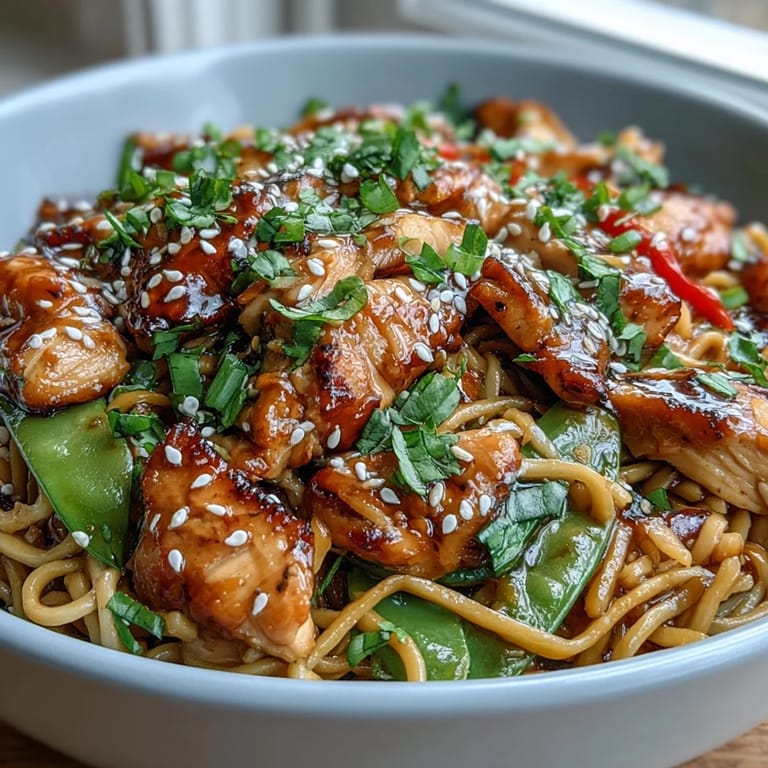
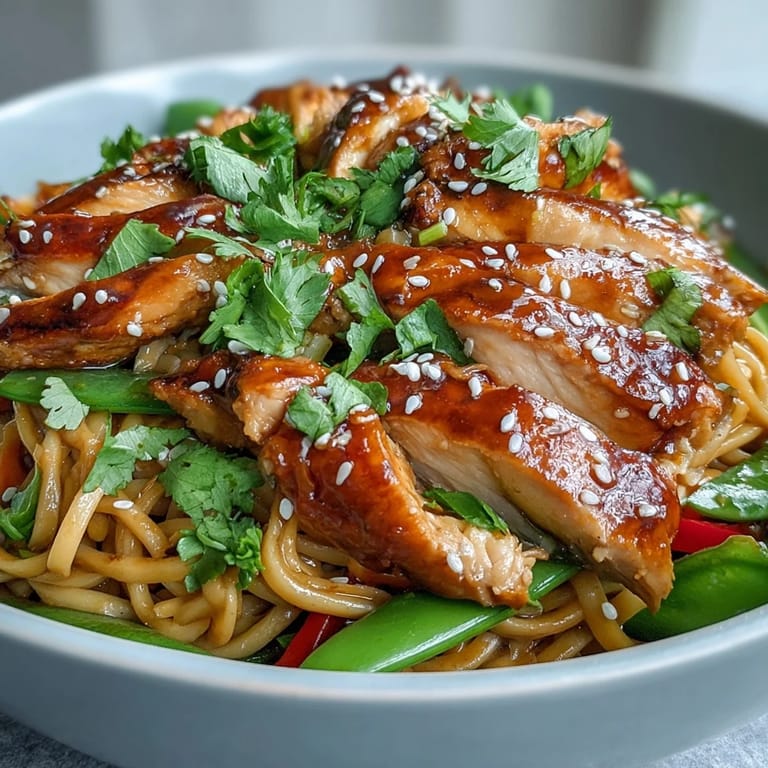
- Divide among bowls, sprinkle with sesame seeds and cilantro, and add lime wedges if you've got them. The garnish isn't decoration—it's the last layer of flavor.
 Save
Save My eight-year-old nephew asked for seconds and said it tasted like the fancy restaurant where his dad takes clients, which is the highest compliment a kid can give. That's when this recipe stopped being something I made on busy nights and became something I make when I want to feel like I have my life together, even if it's just for thirty-five minutes.
Why This Sauce Works
The secret isn't in any single ingredient—it's in the ratio. Sesame oil is bold and can overpower everything, but here it's balanced by soy sauce's saltiness, brown sugar's sweetness, and ginger's bite. Rice vinegar keeps it from being heavy, and garlic ties it all together. If you mess with the proportions, you'll feel it immediately, so measure carefully the first time.
Vegetable Flexibility
I've made this with broccoli when I had it, mushrooms when I didn't, and once with whatever was left in the crisper drawer. The rule is simple: if it cooks in two to three minutes and stays crisp, it belongs in this bowl. Snap peas and bell pepper are the backbone, but everything else is just a supporting player.
Timing and Temperature
The difference between great and mediocre is whether your vegetables stay crisp or turn into mush. High heat, thin slices, and a two-minute window—that's the whole thing. I learned to set a timer because my brain wanders, and suddenly I'm looking at overcooked snap peas.
- Keep your skillet hot: Medium-high heat isn't a suggestion; it's what keeps everything from steaming.
- Don't walk away when the vegetables are cooking: Two or three minutes goes fast, and you want to watch for the moment they're hot but still snappy.
- Cold noodles mixed into a hot sauce will come right to temperature: You don't need to cook them again, just toss and heat through for a minute.
 Save
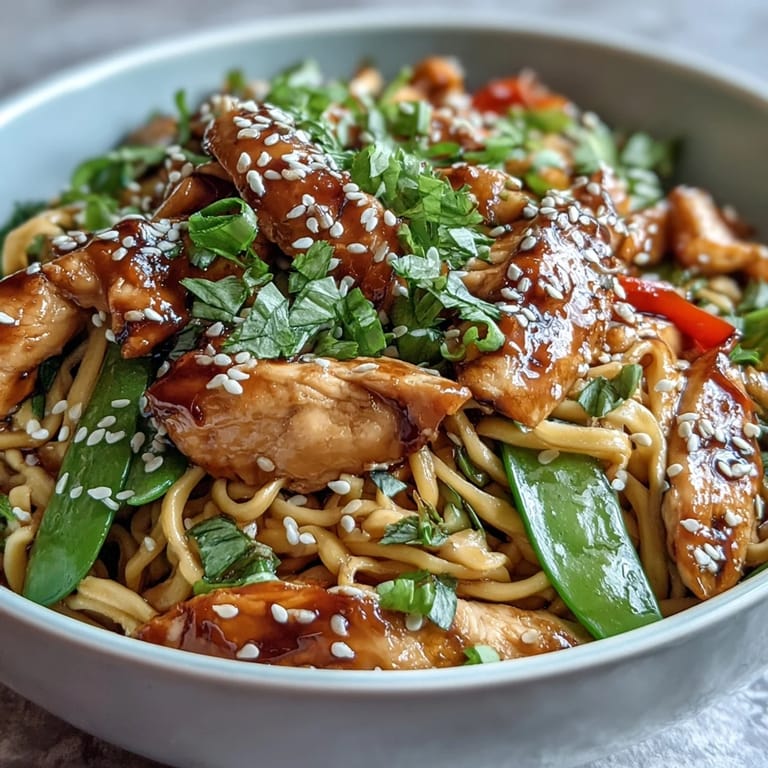
Save This bowl became my answer to the question I used to dread: what's for dinner? It's simple enough that you can make it on a weeknight but tasty enough that you'll crave it.
Recipe FAQs
- → What type of noodles work best?
Udon, soba, or rice noodles all work beautifully here. Udon offers a thick, chewy texture that stands up well to the sauce, while soba adds a nutty buckwheat flavor. Rice noodles make a great gluten-free option. Cook them according to package directions and rinse under cold water to prevent sticking.
- → Can I make this ahead of time?
You can prep the vegetables, slice the chicken, and whisk the sauce up to a day in advance. Store everything separately in airtight containers in the refrigerator. When ready to serve, cook the noodles fresh and stir-fry the components. The dish tastes best assembled just before eating.
- → How can I make this vegetarian?
Replace the chicken with firm tofu, pressed and cubed, or tempeh for protein. Pan-fry until golden and crisp before adding vegetables. The sauce works perfectly with plant-based proteins, and the vegetable combination already provides plenty of texture and flavor.
- → Is this gluten-free?
The standard version contains gluten from the noodles and soy sauce. To make it gluten-free, use tamari instead of soy sauce and choose rice noodles or certified gluten-free udon. Always check labels on condiments like rice vinegar to ensure no hidden gluten additives.
- → Can I adjust the sweetness?
Absolutely. The brown sugar balances the salty soy sauce, but you can reduce it to 1 tablespoon for less sweetness or increase to 3 tablespoons if you prefer a stronger teriyaki-style glaze. The sauce will naturally thicken as it simmers with the cornstarch, coating everything beautifully.
- → What vegetables can I add?
Broccoli florets, sliced mushrooms, baby corn, or bok choy all work well. Add harder vegetables like broccoli and carrots first so they have time to become tender, then add quick-cooking vegetables like snap peas and bell peppers. Use whatever looks fresh at the market.