 Save
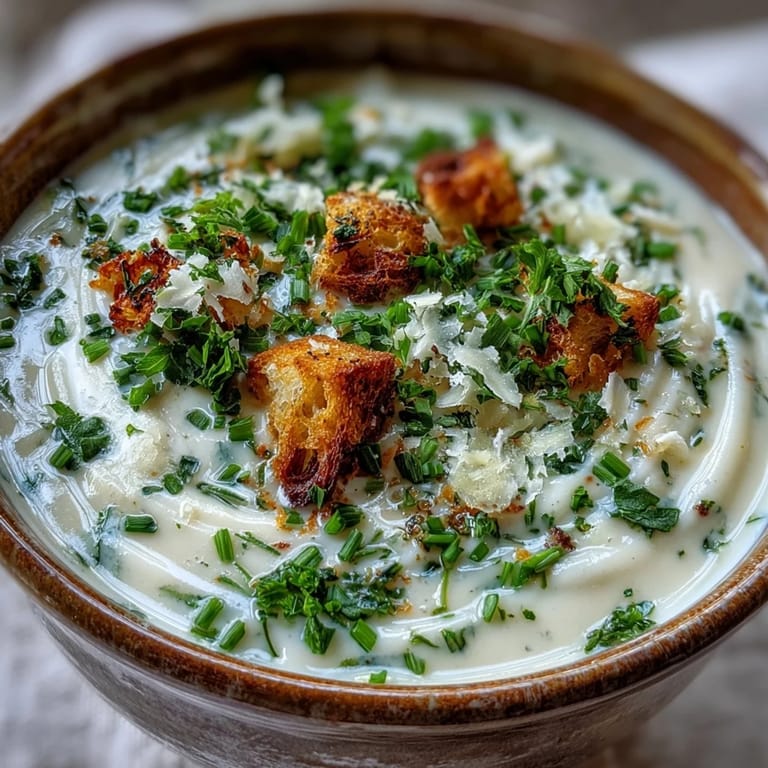
Save There's something almost magical about what happens when you roast garlic slowly until it turns sweet and mellow, then let it mingle with cream and fresh herbs. I discovered this soup on a grey afternoon when my farmer's market haul included more garlic than I knew what to do with, and I decided to stop fighting it and lean into it instead. The result was a bowl of pure comfort that tasted nothing like harsh garlic breath and everything like a warm embrace. My partner took one spoonful and asked if I'd somehow learned to cook in France overnight. I hadn't, but I understood the question.
I made this for my mother-in-law on her first visit to our place, worried the whole time that it would taste too simple or too garlicky, but she had three bowls and asked for the recipe before dessert. There's real power in a soup that doesn't need to shout to be memorable.
Ingredients
- Large onion and leek, finely chopped: These two are your gentle base, softening first to create a sweet foundation that won't let the garlic steal the show.
- 10 large garlic cloves, peeled and sliced: This is not an error, and yes, it's the whole point—sliced rather than minced means they cook gradually and transform into something creamy and kind.
- Medium potatoes, peeled and diced: They dissolve partly into the soup, thickening it naturally while adding body and a subtle earthiness that balances the herbs.
- Vegetable broth: Use one you actually like drinking, because you'll taste it directly here, and good broth makes all the difference.
- Whole milk or plant-based milk: Adds richness and softens the edges of everything—dairy cream works if you want luxury, but this keeps it honest and approachable.
- Fresh thyme, parsley, and chives: These are not optional, and they're best used fresh; dried herbs will make it taste like something from a box, and we're not doing that here.
- Olive oil: A good one, because it's one of the few ingredients doing solo work at the start.
- Salt and pepper: Taste as you go, because garlic's sweetness changes how seasoning behaves.
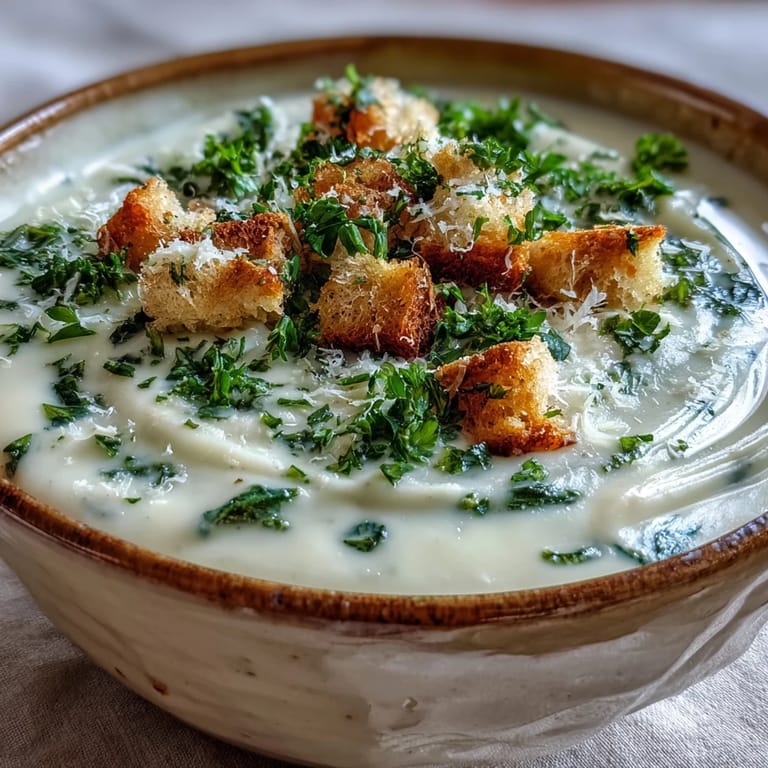
- Parmesan and croutons, optional: These are the exclamation points if your mood calls for them, but the soup stands perfectly fine without them.
Tired of Takeout? 🥡
Get 10 meals you can make faster than delivery arrives. Seriously.
One email. No spam. Unsubscribe anytime.
Instructions
- Start your foundation gently:
- Heat olive oil over medium heat and add your onion and leek, letting them soften for 4 to 5 minutes while you listen for that soft sizzle and watch them turn translucent at the edges. Don't let them brown—this is about coaxing sweetness, not caramelizing.
- Introduce the garlic without rushing:
- Lower the heat slightly if needed, add your sliced garlic, and stir constantly for 2 to 3 minutes, breathing in that aroma as it fills your kitchen. The smell will tell you when it's right—fragrant and warm, never sharp or bitter.
- Build your flavor base:
- Toss in the diced potatoes along with thyme, salt, and pepper, and let everything cook together for 2 minutes so the flavors start knowing each other. This is also where you taste and trust your instincts about seasoning.
- Let it simmer into tenderness:
- Pour in your broth, bring it to a boil, then lower the heat and let it bubble gently uncovered for 20 minutes until the potatoes collapse easily under a spoon. Set a timer so you don't wander off and forget, but don't worry about precision—5 minutes either way won't ruin anything.
- Finish with milk and herbs:
- Remove from heat, stir in the milk and most of your fresh herbs (save some for the top), and let it cool for just a minute so you're not blending something dangerously hot. This is when the soup stops being ingredients and starts being something whole.
- Blend to your preferred texture:
- Use an immersion blender to purée it until smooth and silky, or give it just a few pulses if you prefer chunks of potato peeking through. Both are right, depending on what your mood demands that day.
- Taste and adjust, then serve:
- Ladle it into bowls, garnish with reserved herbs and maybe some Parmesan if you're feeling it, and watch someone's face when they taste how good something this simple can be. Serve warm, never piping hot, so the herb flavors shine through.
 Save
Save 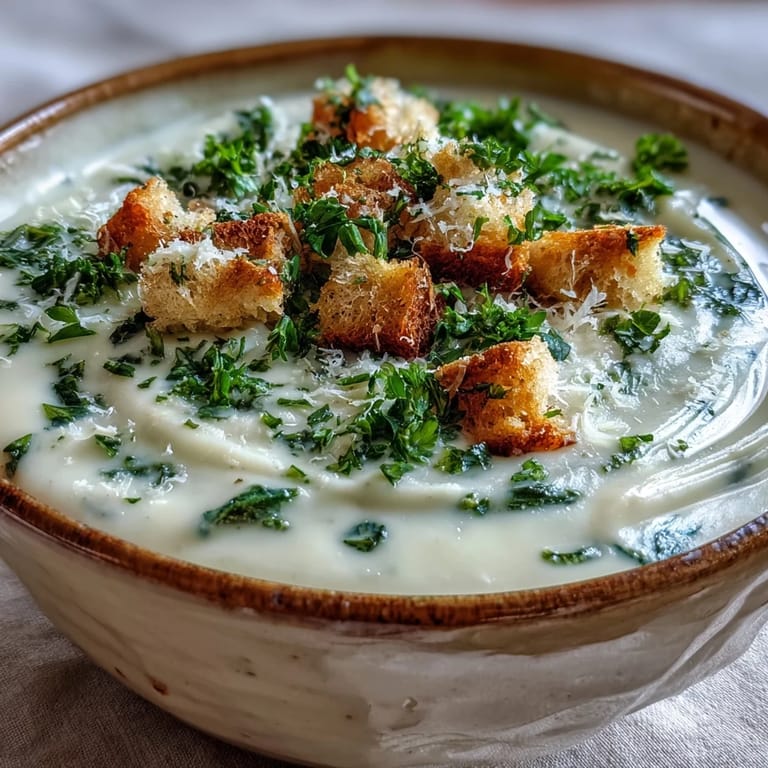 Save
Save Last winter, I made this soup for a friend who'd been sick for weeks, and she said it was the first thing that tasted like food instead of obligation. That's when I realized garlic and herbs aren't just flavoring—they're a way of saying you cared enough to get it right.
Why Fresh Herbs Change Everything
The difference between this soup with fresh thyme, parsley, and chives and the same soup with dried versions is the difference between hearing music played live and hearing a recording of it. Fresh herbs have brightness and personality that dried herbs simply can't match, especially in a soup this delicate. You taste them in every spoonful, not as an afterthought, but as proof you cared about the details.
The Secret of Gentle Heat
Every time I've rushed this recipe, turning the heat up to speed things along, the garlic has turned sharp and mean, and the whole thing tastes rushed. But when I give it time and medium heat, the garlic softens and sweetens like it's been given permission to be its best self. Medium heat isn't slower in any way that matters—it's just smarter, and the soup tastes like you've been thinking about it all day.
Variations and Reasons to Tweak
This soup is gentle enough to be a canvas, so don't be afraid to adjust it for what you have on hand or what you're in the mood for. A splash of cream instead of milk makes it richer, roasted garlic instead of raw makes it deeper, a pinch of nutmeg makes it feel fancy without announcing itself. The core of it—soft vegetables, good broth, fresh herbs—stays the same, and everything else is you making it yours.
- If you want it vegan, swap the milk for oat or almond milk and skip the cheese, and it loses nothing important.
- A handful of wilted spinach or kale stirred in at the very end adds color and nutrition without changing the voice of the soup.
- Leftover soup keeps in the fridge for three days and freezes beautifully, though the fresh herb garnish is worth adding after reheating.
 Save
Save  Save
Save This is the kind of soup that makes you feel taken care of, whether you're making it for someone else or finally doing something kind for yourself. It asks for so little and gives back so much more than you'd expect.
Recipe FAQs
- → Can I make this soup dairy-free?
Yes, simply substitute the whole milk with unsweetened plant-based milk such as almond, oat, or soy milk. Omit the Parmesan cheese or use a vegan alternative for garnish.
- → How can I make the soup creamier?
For a richer, creamier texture, replace half of the milk with heavy cream or use full-fat coconut milk for a dairy-free option. You can also add more potatoes for natural thickness.
- → Will the garlic be too strong?
No, cooking the garlic gently for several minutes and then simmering it in broth mellows its flavor significantly, creating a sweet, aromatic taste rather than a sharp, pungent one.
- → Can I prepare this soup in advance?
Yes, this soup stores well in the refrigerator for up to 3 days. Reheat gently on the stovetop, adding a splash of broth or milk if it thickens. The flavors often deepen after a day.
- → What can I serve with this soup?
Serve with crusty artisan bread, gluten-free rolls, or homemade croutons. It pairs beautifully with a crisp Sauvignon Blanc or a light green salad for a complete meal.
- → Can I freeze this soup?
Yes, this soup freezes well for up to 3 months. Cool completely before transferring to freezer-safe containers. Thaw overnight in the refrigerator and reheat gently, stirring occasionally.