 Save
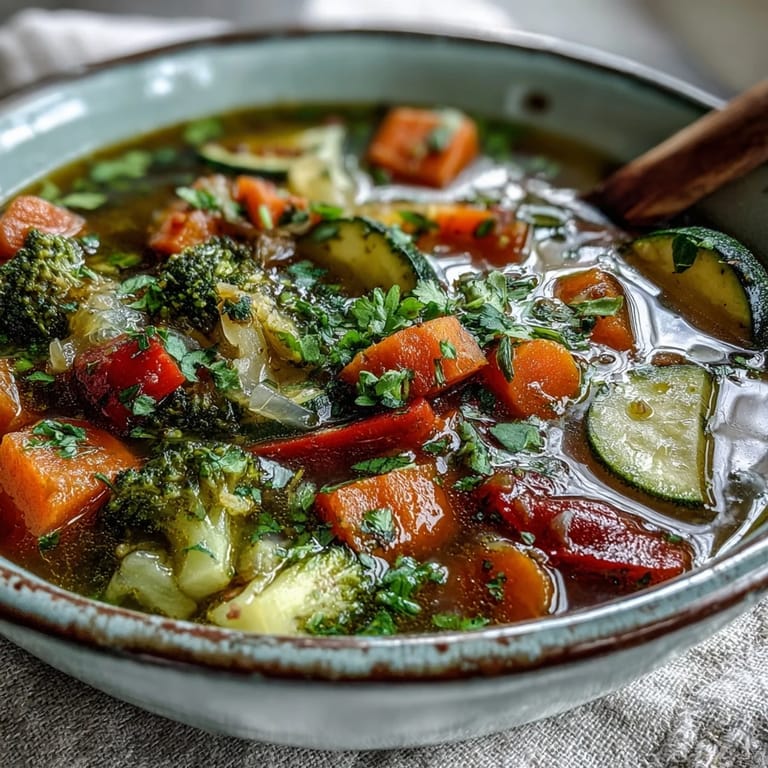
Save My neighbor once knocked on my door on a gray afternoon, carrying fresh ginger root that smelled almost medicinal, asking if I knew what to do with it. I didn't have a plan, but I remembered my grandmother simmering vegetables with ginger whenever anyone felt under the weather, so I started chopping. That soup turned into something we both looked forward to making together every few weeks, and it became the dish I now reach for when I want something that feels both comforting and alive on the tongue.
I made this for my sister when she was recovering from a cold, and she later told me she could taste how much care went into it just from the first spoonful. The broth was clear enough to see through but deep enough to feel nourishing, and the ginger hit just right—warm without burning. She asked for the recipe that same day, and now it's become her go-to when she's cooking for people she cares about.
Ingredients
- Fresh ginger: Don't skip the fresh stuff—it brings a brightness that powdered ginger simply can't match, and the warmth builds as you simmer it.
- Medium onion: This is your flavor foundation; take the time to dice it evenly so it softens into the broth properly.
- Carrots and celery: These two work as a silent team, adding sweetness and structure that holds the whole soup together.
- Red bell pepper: It adds color and a subtle sweetness that balances the spice of the ginger.
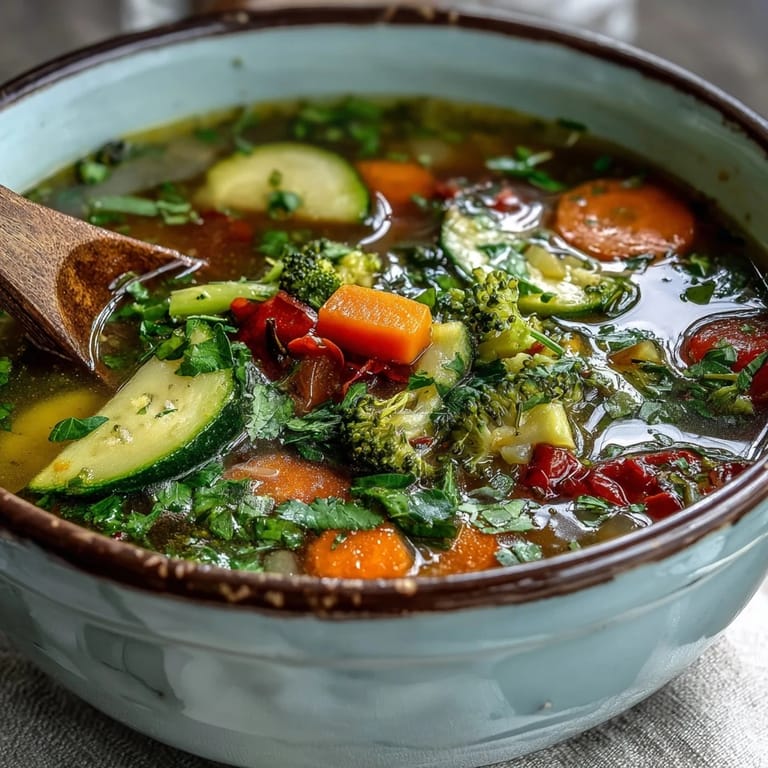
- Zucchini: A workhorse vegetable that softens nicely without disappearing, adding body without heaviness.
- Broccoli florets: Keep them smaller than you think you should so they don't dominate the pot.
- Garlic cloves: Mince them fine and cook them just long enough to become fragrant but not bitter.
- Vegetable broth: Quality matters here since it's the backbone—taste a few brands and pick one that feels clean and alive on its own.
- Olive oil: Just enough to coat the pot and help everything release its flavors without turning greasy.
- Sea salt and black pepper: Start conservative and taste as you go; you can always add more but you can't take it back.
- Soy sauce or tamari: A tablespoon adds umami depth that makes people ask what your secret ingredient is.
- Fresh cilantro or parsley: The final flourish that makes each bowl feel intentional rather than just functional.
- Toasted sesame oil: A drizzle at the end brings a nutty richness that ties everything together.
Tired of Takeout? 🥡
Get 10 meals you can make faster than delivery arrives. Seriously.
One email. No spam. Unsubscribe anytime.
Instructions
- Start your flavor base:
- Heat the olive oil in a large pot over medium heat, then add the diced onion, carrots, and celery. Let them soften for about 5 minutes, stirring occasionally until the onion becomes translucent and the kitchen starts smelling like home cooking. You'll know it's ready when you can almost see through the onion pieces.
- Wake up the aromatics:
- Add the minced garlic and grated ginger, cooking for exactly 2 minutes until the smell hits you in a way that makes you pause and take a deep breath. This is where the magic starts; don't walk away or the garlic might catch and turn bitter.
- Layer in the bright vegetables:
- Stir in the bell pepper, zucchini, and broccoli florets, giving everything a minute to toss together before letting it cook for 3 more minutes. The vegetables should still have some life to them at this point.
- Build the broth:
- Pour in your vegetable broth and turn the heat up until you see a gentle boil, then ease it back down to a simmer. This is a good moment to taste the broth on its own and decide if it feels right to you.
- Season and simmer:
- Add your salt, pepper, and soy sauce if you're using it, then let everything bubble gently for 15 to 20 minutes until the vegetables are tender but still have some texture. Taste a spoonful partway through and adjust the seasoning honestly—this is your soup to make your way.
- Finish and serve:
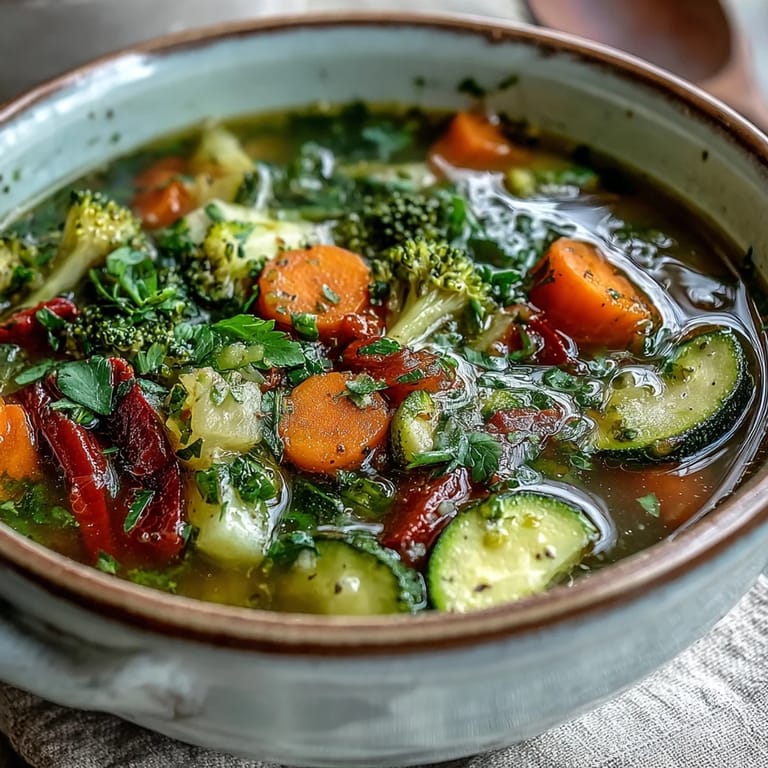
- Ladle the hot soup into bowls, then drizzle each one with a touch of sesame oil and scatter the fresh herbs across the top. Let people see what they're about to eat; it matters more than you'd think.
 Save
Save  Save
Save There's a moment about halfway through simmering when the whole kitchen smells incredible and you realize you've made something from almost nothing that people will remember. That's when I know this soup is doing what it's supposed to do.
How to Make It Your Own
This soup is a canvas more than a strict rulebook. I've seen people add spinach at the last minute, swap in snap peas, throw in mushrooms that had been sitting in the crisper drawer, or stir in cooked lentils for extra protein. The ginger and broth are the backbone, but everything else bends to what you have and what you're hungry for. Some nights I make it heavier by serving it with rice noodles on the side; other times I keep it light and pair it with good bread.
Serving and Pairing Ideas
This soup works equally well as a starter that makes people excited for the next course or as a whole meal on its own when you're not in the mood for something heavy. I've served it in small cups at dinner parties, in big bowls on couch days, and in thermoses for people heading into busy afternoons. A slice of crusty bread is the obvious choice, but rice noodles stirred right into the bowl transform it into something almost entirely different.
Storage and Keeping
This soup keeps beautifully in the refrigerator for about four days, and the flavors actually deepen as it sits, making it one of those dishes that's somehow better as leftovers. You can also freeze it in portions, though I'd leave out the sesame oil and add it fresh when you reheat, since heat makes it less fragrant. Thaw it slowly in the fridge overnight if you have the time, then gently warm it on the stove with a splash of extra broth if it's gotten too thick.
- The ginger flavor will be stronger the day after you make it, so taste before adding extra on day two.
- If you're bringing it somewhere, transport it in a good container and reheat gently rather than blasting it in the microwave.
- A squeeze of fresh lemon juice right before serving brightens everything if the soup tastes a bit flat after sitting.
 Save
Save 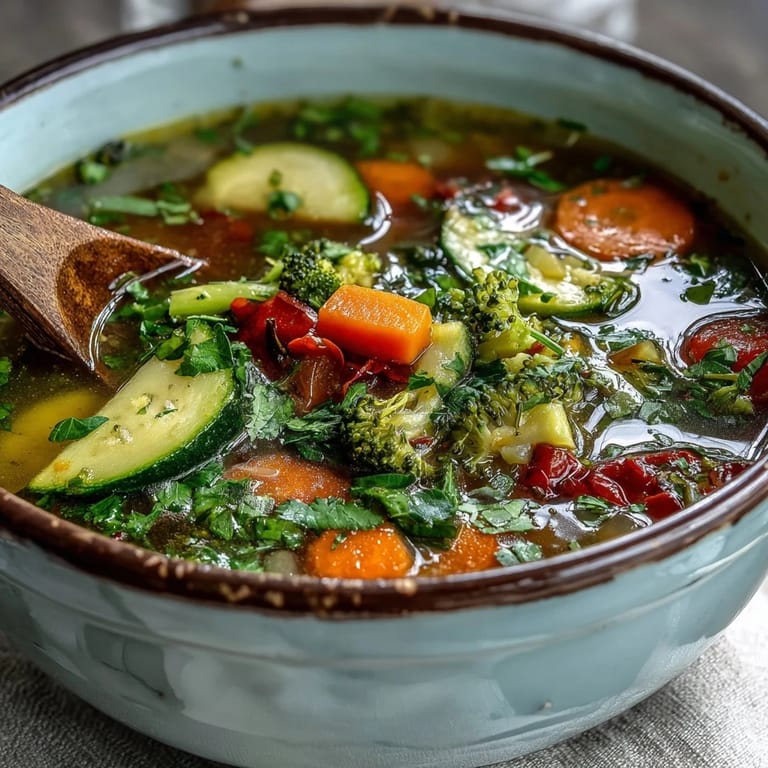 Save
Save Make this soup when you want to feel like you're taking care of someone, even if that someone is just yourself. It's one of those quiet dishes that reminds you why cooking matters.
Recipe FAQs
- → Can I use frozen vegetables instead of fresh?
Yes, frozen vegetables work well in this soup. Add them directly to the simmering broth without thawing, and reduce cooking time by 5 minutes since they're pre-blanched.
- → How do I store leftover ginger vegetable soup?
Store cooled soup in an airtight container in the refrigerator for up to 4 days. Reheat gently on the stovetop or microwave. The flavors often deepen overnight.
- → What can I substitute for fresh ginger?
Use 1 teaspoon of ground ginger as a substitute, though fresh ginger provides better flavor and aroma. Add ground ginger with the other spices during cooking.
- → Can I make this soup in advance?
Absolutely. Prepare the soup completely and refrigerate for up to 3 days before serving. The vegetables will soften slightly but the flavors intensify beautifully.
- → How can I make this soup more filling?
Add cooked rice noodles, quinoa, or lentils for extra substance. Cubed tofu or chickpeas also boost protein content while maintaining the vegan profile.
- → Is this soup freezer-friendly?
Yes, freeze in portions for up to 3 months. Some vegetables may soften after thawing, but the flavor remains excellent. Thaw overnight in the refrigerator before reheating.