 Save
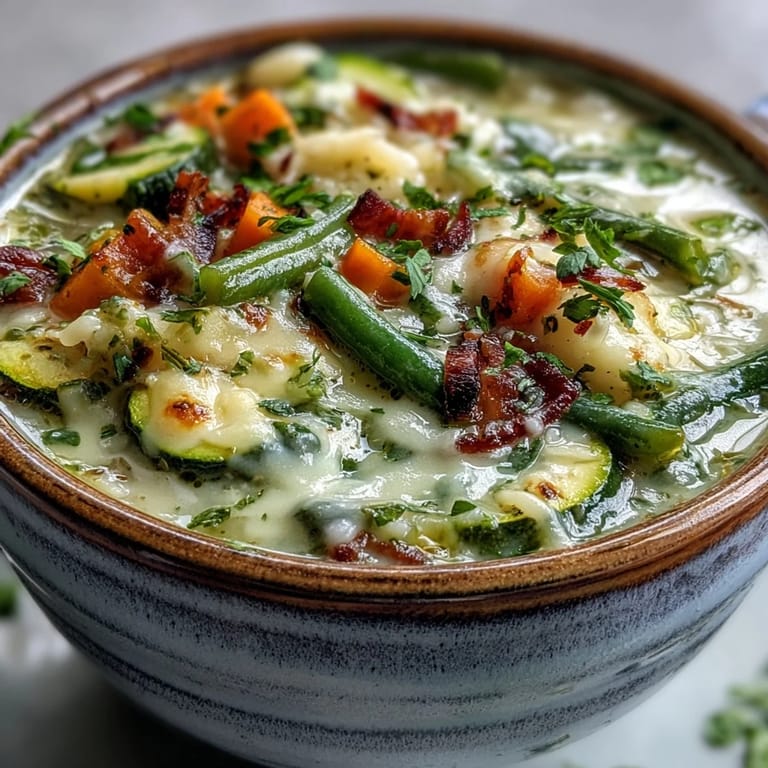
Save My neighbor Maria handed me a mason jar of homemade Parmesan rind one afternoon, explaining that Italians never waste them. That jar sat in my fridge for weeks until a rainy Tuesday when I decided to build a soup around it. The moment that rind hit the simmering broth, the kitchen filled with this deep, umami-rich aroma that made everything else fade away. What started as a way to use up scraps became the soup I now make whenever someone needs comfort food that actually feels nourishing.
I made this for my sister during her first week in a new apartment when her kitchen was still mostly empty boxes. She had a pot, a knife, and not much else, so this soup became our dinner with crusty bread from the corner bakery. Watching her face light up as she tasted it reminded me that sometimes the simplest dishes are the ones that stick with people, not because they're fancy, but because they arrive exactly when needed.
Ingredients
- Olive oil: Use good quality oil here since it's one of the first things you taste, and it carries the fragrance of the garlic and onion into the whole pot.
- Onion and garlic: These two are the foundation, and the time you spend getting them translucent and fragrant sets the entire mood of the soup.
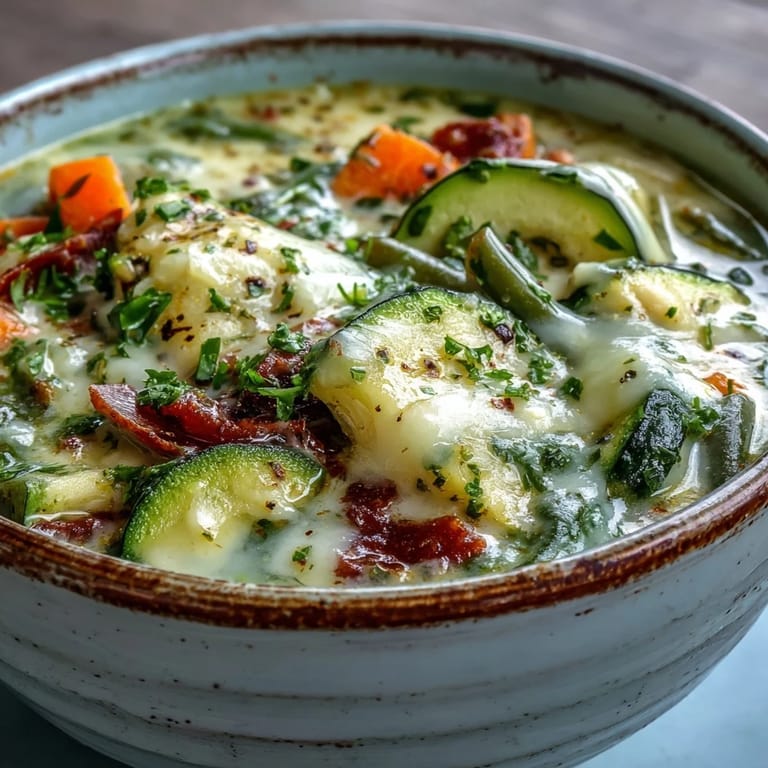
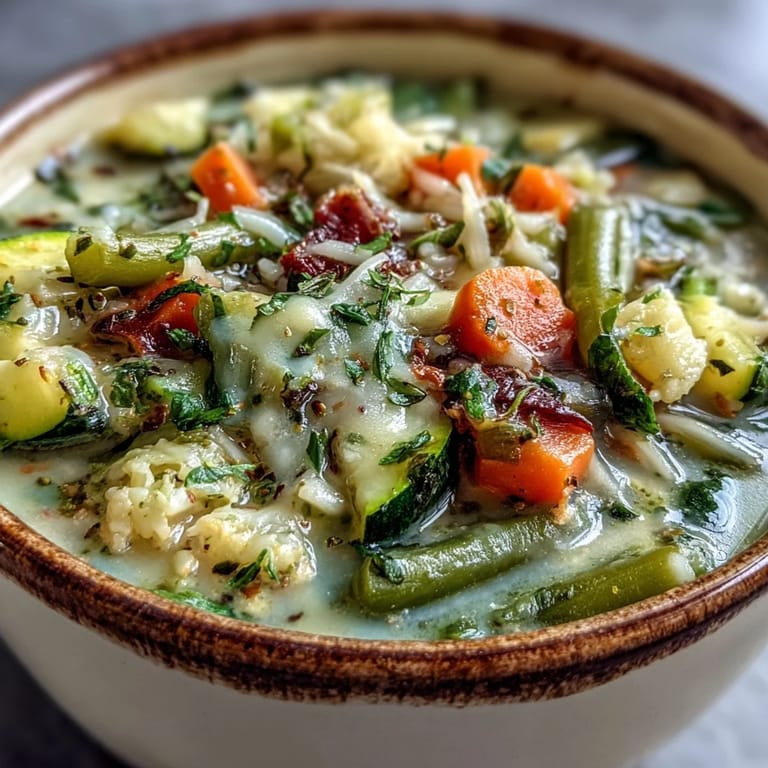
- Carrots, celery, zucchini, potato, and green beans: The vegetable medley works because they all soften at roughly the same rate, so you avoid some mushy while others are still crunchy.
- Diced tomatoes: Canned tomatoes here are actually better than fresh because they're already broken down and their acidity balances the richness of the cheese.
- Vegetable broth: This is your liquid backbone, so use one you'd actually drink on its own because you'll taste it in every spoonful.
- Freshly grated Parmesan cheese: Pre-grated cheese has anti-caking agents that can make your soup grainy, so take the two minutes to grate it fresh and notice the difference immediately.
- Parmesan rind: This optional ingredient is honestly the secret weapon, adding a savory depth that makes people ask what your special ingredient is.
- Dried Italian herbs, salt, pepper, and fresh parsley: The herbs go in early to infuse the broth, while the parsley is a finishing touch that adds brightness and freshness.
Tired of Takeout? 🥡
Get 10 meals you can make faster than delivery arrives. Seriously.
One email. No spam. Unsubscribe anytime.
Instructions
- Start with heat and aromatics:
- Warm the olive oil in your pot and add the onion and garlic, listening for that gentle sizzle that means the temperature is right. After about two to three minutes, they should smell absolutely incredible and look soft and translucent, which is your signal that you're ready for the next step.
- Build your vegetable base:
- Toss in all the chopped vegetables and stir them around for five minutes so they start to soften and release their own flavors into the oil. You'll notice the kitchen starting to smell like a farmers market, which is exactly what you want.
- Add the liquid and seasonings:
- Pour in the tomatoes with their juice and the broth, then scatter in your dried herbs, salt, and pepper. If you have a Parmesan rind, drop it in now like you're adding a secret ingredient that will do the work for you.
- Let it simmer gently:
- Bring everything to a boil, then turn down the heat so it's just barely bubbling at the edges, cover it, and let it cook for 25 to 30 minutes until all the vegetables are completely tender. The longer, gentler cooking gives all the flavors time to get to know each other.
- Finish with cheese:
- Remove the Parmesan rind if you used one, then stir in your freshly grated cheese and watch it melt into the broth, creating this silky, savory richness. Taste it now and adjust the salt and pepper because this is your moment to make it exactly right.
- Serve with intention:
- Ladle it into bowls, top with chopped parsley and extra Parmesan, and watch someone's whole day shift when they taste it.
 Save
Save 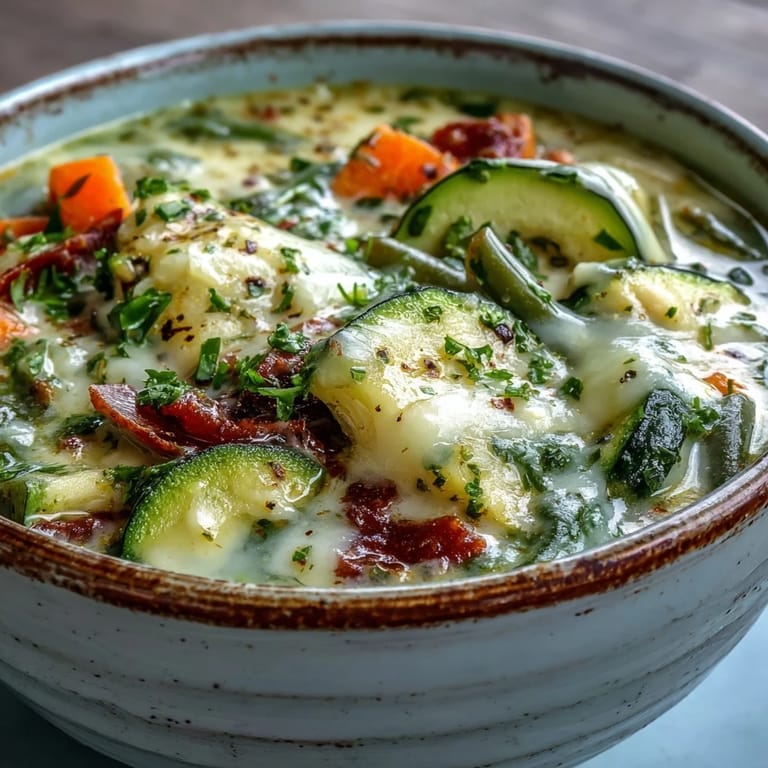 Save
Save There was a moment during a dinner party when someone went back for thirds and just sat quietly with their bowl, clearly lost in thought. Later they told me it reminded them of their grandmother's kitchen, even though they'd never had this exact soup before. That's when I understood that good soup does something beyond nourishment, it somehow reaches into memory and belonging.
The Parmesan Rind Secret
Most people throw away Parmesan rinds without realizing they're liquid gold for soup making. Start saving them in a freezer bag, and when you have one, toss it into any simmering broth to add an almost mysterious savory flavor that nobody can quite identify but everyone notices. Even if you never use it for soup, keeping this practice reminds you that good cooking is often about respecting ingredients and wasting nothing.
Making It Your Own
This soup is sturdy enough to handle your additions without losing its character. I've added spinach in the last few minutes, stirred in small pasta shapes or beans, and even thrown in a handful of kale when that's what I had. The base stays true while you make it match whatever you're craving or whatever your pantry offers up.
Storage and Serving
This soup tastes even better the next day after the flavors have settled into a deeper harmony, so making extra is always a good idea. It keeps refrigerated for up to four days and also freezes beautifully in individual portions for those moments when you need comfort that's ready in minutes.
- Let it cool completely before freezing, and leave a little room at the top of the container because soup expands slightly.
- Reheat gently on the stove rather than the microwave if you can, so the vegetables don't break apart and the flavors warm through evenly.
- Always taste and adjust seasonings after reheating because flavors can shift slightly during storage.
 Save
Save 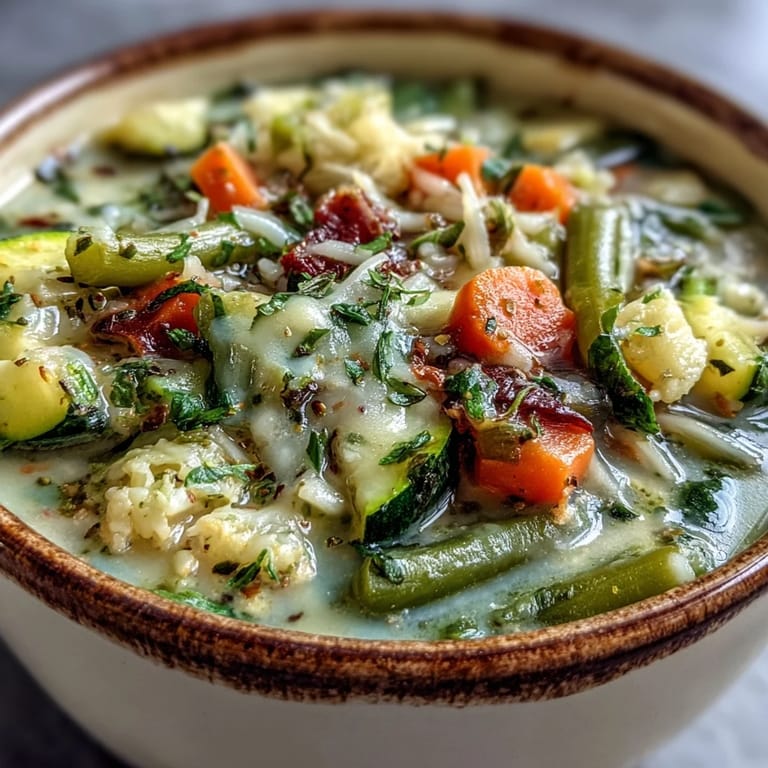 Save
Save This soup has become the thing I make when words feel inadequate, when someone needs feeding in the deepest sense. It's proof that simple ingredients in the right proportions and with a little patience become something that nourishes in ways that go beyond nutrition.
Recipe FAQs
- → Can I use frozen vegetables instead of fresh?
Yes, frozen vegetables work well. Add them directly to the pot without thawing, but reduce cooking time by 5-10 minutes since they're already blanched.
- → What can I substitute for Parmesan cheese?
Pecorino Romano offers a similar sharp, salty flavor. For dairy-free options, use nutritional yeast or vegan Parmesan alternatives, though the flavor profile will differ.
- → How do I store leftover soup?
Store in an airtight container in the refrigerator for up to 4 days. The soup can also be frozen for up to 3 months. Reheat gently on the stovetop, adding a splash of broth if needed.
- → Can I add protein to this soup?
Absolutely. White beans, chickpeas, or cannellini beans make excellent additions. For non-vegetarians, shredded rotisserie chicken or Italian sausage work beautifully.
- → Why is my soup too thin or too thick?
Adjust consistency by adding more broth to thin or simmering uncovered to thicken. You can also mash some vegetables against the pot side or blend a portion for a creamier texture.
- → What's the purpose of the Parmesan rind?
The rind infuses the broth with deep, umami-rich Parmesan flavor as it simmers. It softens but doesn't fully dissolve, so remember to remove it before serving.