 Save
Save August afternoons at the farmers market always find me hunting for the perfect peaches, the ones that smell like sunshine itself. I stood there last Tuesday sniffing eight different baskets until an elderly shopper laughed and said 'you know your peaches, honey.' I bought every perfect one from that stall because a peach pie deserves nothing less than fruit that was still on the tree that morning.
Last summer my daughter accidentally helped me make the best version of this pie. She'd sliced the peaches too thin while I was distracted by a phone call and I worried it would ruin the texture. Those delicate slices actually cooked down into this incredible silky consistency that we've replicated intentionally ever since. Sometimes happy kitchen accidents teach us the best lessons.
Ingredients
- All-purpose flour (2 1/2 cups, 320 g): The foundation of your crust. I've learned that measuring by weight rather than volume gives consistently flaky results.
- Cold unsalted butter (1 cup, 225 g): Must be ice cold straight from the fridge. I cut mine into cubes then freeze them for 10 minutes before starting.
- Salt (1 tsp for crust, 1/4 tsp for filling): Enhances all the other flavors. Don't skip it even in a dessert.
- Granulated sugar (1 tbsp for crust, 3/4 cup for filling): A touch in the crust helps it brown beautifully. The filling amount balances perfectly with naturally sweet peaches.
- Ice water (6 to 8 tbsp): The key to a tender crust. Add it one tablespoon at a time and stop when the dough just holds together.
- Ripe peaches (6 cups, about 900 g): Use a mix of yellow and white varieties for complexity. They should yield slightly to gentle pressure but not feel mushy.
- Cornstarch (1/4 cup, 30 g): Thickens the fruit juices perfectly. Too little and you'll have soup, too much makes it gluey.
- Lemon juice (1 tbsp): Brightens the peach flavor and helps the cornstarch work its magic.
- Ground cinnamon (1/2 tsp): The classic warm spice partner for peaches. Use fresh cinnamon for best results.
- Ground nutmeg (1/4 tsp): Adds subtle warmth without overpowering. Freshly grated is absolutely worth it if you can.
- Vanilla extract (1 tsp): Pure vanilla extract makes everything taste better. Never use imitation in something this special.
- Egg (1, beaten): Creates that gorgeous golden finish on the crust. Make sure it's room temperature for even brushing.
- Coarse sugar (1 tbsp, optional): Sparkle and crunch. I use turbinado sugar for its beautiful golden color.
Tired of Takeout? 🥡
Get 10 meals you can make faster than delivery arrives. Seriously.
One email. No spam. Unsubscribe anytime.
Instructions
- Mix the dry ingredients:
- Whisk flour, sugar, and salt in a large bowl until thoroughly combined. This ensures even distribution throughout your crust.
- Cut in the butter:
- Add cold cubed butter and work it in with a pastry blender or your fingertips until you see coarse pea-sized crumbs. Some larger butter pieces should remain visible.
- Add ice water gradually:
- Sprinkle water one tablespoon at a time, tossing gently with a fork. The dough should just hold together when squeezed.
- Form dough discs:
- Divide dough in half, press into discs, wrap tightly, and refrigerate at least one hour. This relaxes the gluten for tenderness.
- Prepare peach filling:
- Toss sliced peaches with sugar, cornstarch, lemon juice, spices, and vanilla. Let stand 10 minutes to macerate.
- Heat your oven:
- Preheat to 400°F (200°C) with a rack in the center position. A hot oven ensures proper crust development.
- Roll bottom crust:
- On a floured surface, roll one dough disc into a 12-inch circle. Transfer to your pie dish and trim edges.
- Add filling:
- Pour peaches into the crust, spreading evenly. Include all those delicious juices that accumulated at the bottom.
- Roll top crust:
- Roll remaining dough and place over filling. Trim, seal edges by pressing together, and crimp decoratively.
- Create steam vents:
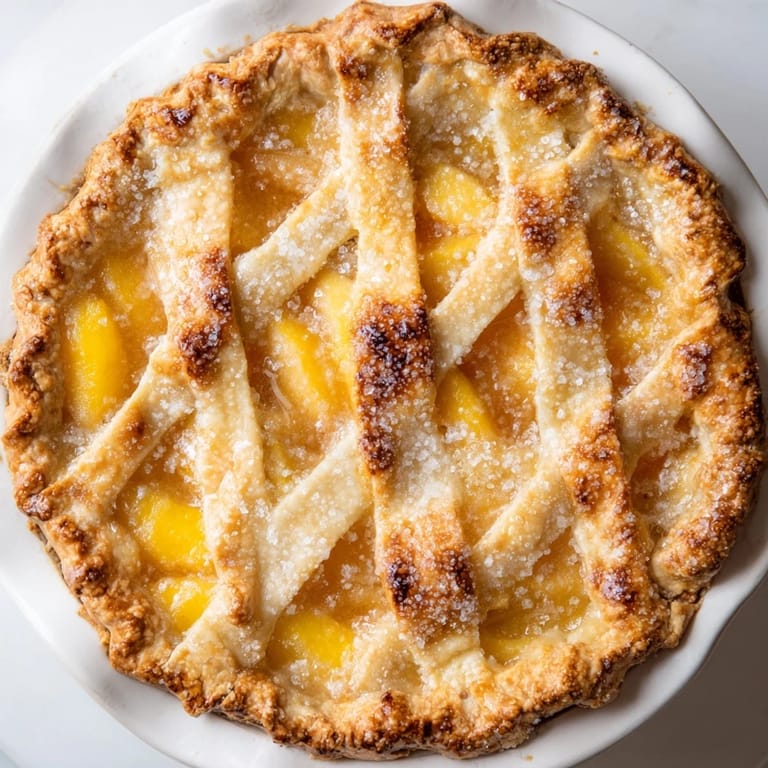
- Cut several slits in the top crust or weave a lattice pattern. This prevents those messy overflowing disasters.
- Apply egg wash:
- Brush beaten egg over the entire top crust. Sprinkle with coarse sugar for that bakery worthy finish.
- Bake until golden:
- Bake 50 minutes until deeply golden and filling bubbles visibly. Cover edges with foil if browning too quickly.
- Cool completely:
- Rest on a wire rack at least 2 hours. I know it's hard but this step is non negotiable for clean slices.
 Save
Save This was the first pie my grandmother taught me to make properly, standing at her tiny kitchen counter with peaches from her backyard tree. She had this rule about never rushing pastry and I can still hear her voice telling me to trust my hands more than the recipe. Now whenever I smell baking peaches, I'm transported back to that afternoon, flour everywhere, learning that some things are worth every minute of careful work.
Getting The Perfect Peach Selection
Not all peaches are created equal for pie making. I always choose freestone varieties because they release from the pit so easily, making prep work much faster. Look for fruit that has a peachy aroma and gives slightly when gently pressed. Avoid any with green shoulders because they'll never develop proper sweetness no matter how long they sit on your counter.
Mastering The Lattice Top
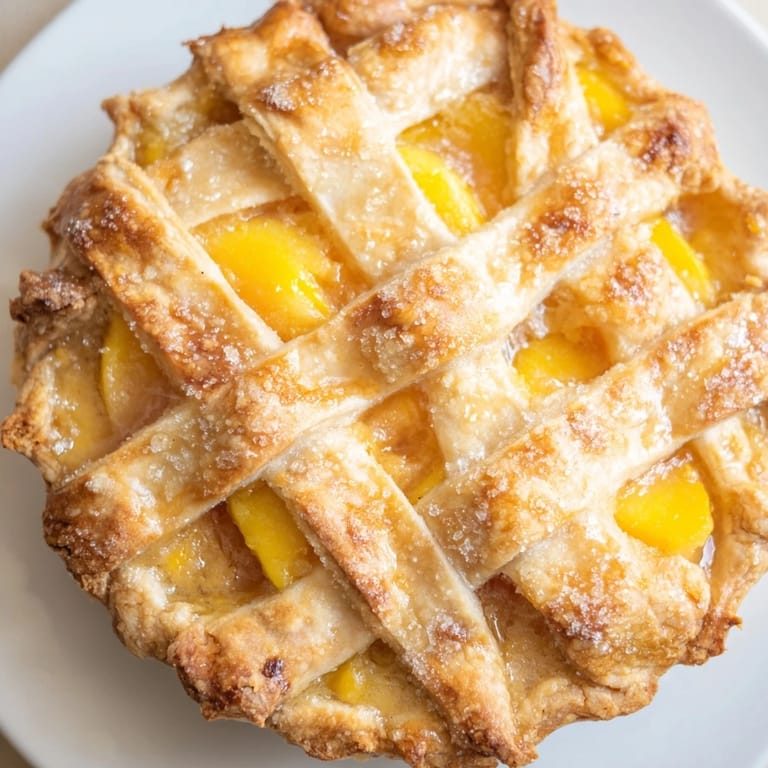
A lattice crust looks impressive but is actually quite forgiving once you understand the rhythm. Cut your dough strips slightly thicker than you think necessary because they shrink during baking. I always make a few extra strips just in case one breaks, and keep a small bowl of water nearby to help seal any overlapping pieces.
Troubleshooting Common Issues
Even experienced bakers run into challenges now and then. Here are the solutions I've discovered through years of pie making adventures.
- If your bottom crust stays soggy, try baking on the lowest oven rack position next time
- Edges browning too quickly is easily solved with a pie shield or carefully placed foil ring
- Filling not thickening enough usually means your peaches were extra juicy, so increase cornstarch by 1 tablespoon next batch
 Save
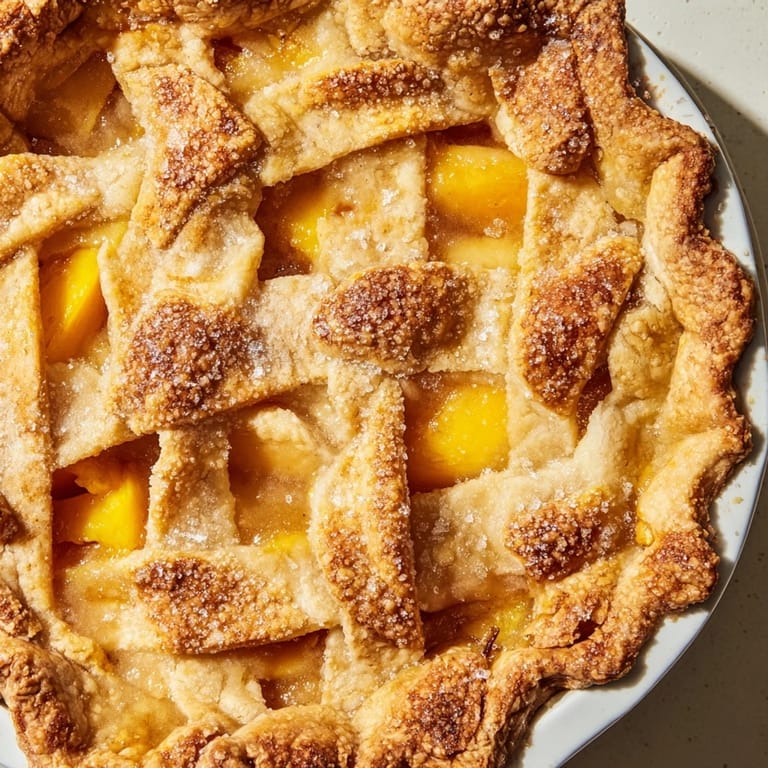
Save There's something deeply satisfying about placing a homemade peach pie on the table, seeing that golden crust catching the light, knowing you created something this beautiful from simple ingredients. Serve it warm with vanilla ice cream while the filling is still silky and watch how quickly it disappears.
Recipe FAQs
- → How do I ensure a flaky crust?
Use cold, cubed butter and gently cut it into the flour without overworking the dough. Chill the dough before rolling to keep it firm and flaky.
- → Can I use different types of peaches?
A mix of yellow and white peaches adds a more complex, balanced sweetness and aroma to the filling.
- → What is the purpose of cornstarch in the filling?
Cornstarch acts as a thickening agent to help the filling set and prevent it from becoming too runny during baking.
- → How do I prevent the crust edges from burning?
If edges brown too quickly, cover them with foil partway through baking to protect them while allowing the rest to crisp properly.
- → Is it necessary to let the dessert cool before serving?
Cooling on a wire rack for at least 2 hours allows the filling to set, making slicing and serving easier and cleaning flavors more distinct.