 Save
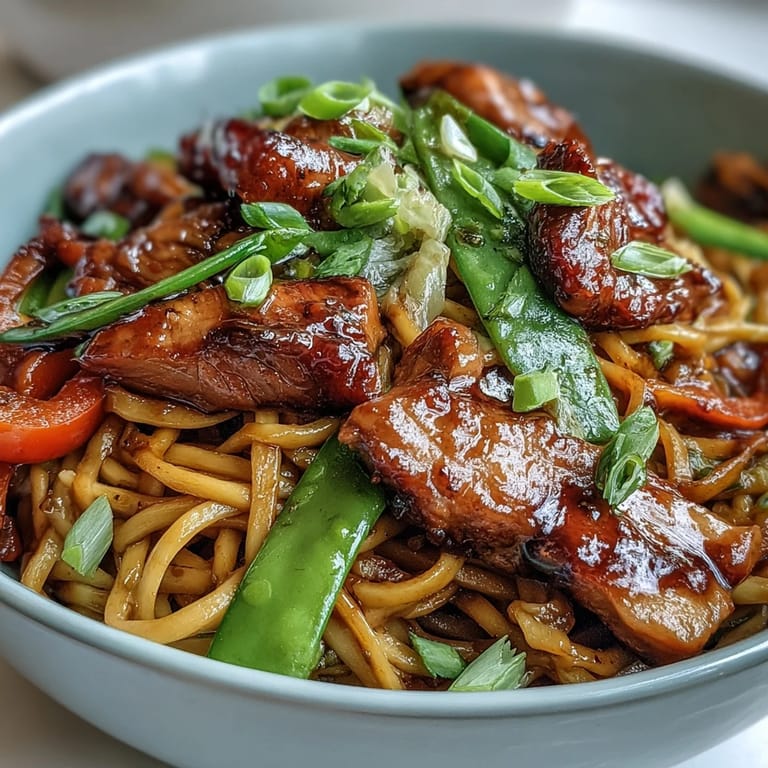
Save There was a Tuesday evening when everything in my fridge looked like it belonged in different meals, and I was too tired to think. I grabbed noodles, a bit of pork from the butcher, and whatever vegetables were still crisp in the drawer. What came together in that wok surprised me—it was better than anything I could have planned. That night taught me that some of the best dishes come from instinct, not instruction.
I made this for my sister after she moved into her first apartment with no furniture and only a single burner. We sat on the floor with bowls balanced on our knees, slurping noodles and laughing about how grown-up we were supposed to be. She still texts me whenever she makes it now, usually with a photo of her own chaotic version. It became our little tradition without us ever planning it that way.
Ingredients
- Pork loin or tenderloin (400 g, thinly sliced): This cut stays tender when cooked fast and high, which is exactly what a stir-fry demands.
- Soy sauce (1 tbsp for marinade, 3 tbsp for sauce): It seasons the pork and builds the backbone of the sauce, so don't skimp on quality here.
- Cornstarch (1 tsp): Mixed with the marinade, it gives the pork a silky coating that helps it brown beautifully.
- Egg noodles or rice noodles (250 g): Either works, but egg noodles have a chewiness that holds up well to tossing in the wok.
- Red bell pepper (1, julienned): It adds sweetness and a pop of color that makes the dish look as good as it tastes.
- Carrot (1, julienned): Cut thin so it cooks quickly and stays slightly crunchy for texture.
- Sugar snap peas (100 g, halved): They bring a fresh snap that balances the richness of the sauce.
- Spring onions (2, sliced): Tossed in at the end, they add a sharp, grassy note that wakes everything up.
- Garlic (2 cloves, minced): The smell of garlic hitting hot oil is half the reason I cook this dish.
- Fresh ginger (1 tbsp, grated): It cuts through the soy and oyster sauce with a warm, spicy brightness.
- Oyster sauce (2 tbsp): This is where the deep, savory complexity comes from, almost like umami in a bottle.
- Hoisin sauce (1 tbsp): A touch of sweetness and a hint of spice that rounds out the sauce perfectly.
- Sesame oil (1 tsp): Just a little at the end adds a toasted, nutty aroma that lingers.
- Brown sugar (1 tsp): It balances the saltiness and helps the sauce cling to the noodles.
- Water (2 tbsp): Loosens the sauce just enough so it coats instead of clumps.
- Vegetable oil (2 tbsp): High smoke point oil is essential for the high heat of stir-frying.
- Sesame seeds (1 tbsp, optional): A sprinkle on top adds a subtle crunch and makes it look like you tried harder than you did.
- Fresh coriander or sliced chili (optional): For those who like a fresh herbal note or a little kick at the end.
Tired of Takeout? 🥡
Get 10 meals you can make faster than delivery arrives. Seriously.
One email. No spam. Unsubscribe anytime.
Instructions
- Marinate the pork:
- In a bowl, toss the pork slices with 1 tablespoon of soy sauce and the cornstarch, making sure each piece is coated. Let it sit for 10 minutes while you prep everything else.
- Cook the noodles:
- Boil the noodles according to the package directions, then drain and set them aside. A quick rinse under cold water stops them from sticking together.
- Mix the sauce:
- In a small bowl, whisk together the soy sauce, oyster sauce, hoisin, sesame oil, brown sugar, and water. Having this ready means no scrambling mid-stir-fry.
- Sear the pork:
- Heat 1 tablespoon of vegetable oil in a large wok or skillet over high heat until it shimmers. Add the pork in a single layer and let it sear for 2 to 3 minutes until browned, then remove and set aside.
- Stir-fry the vegetables:
- Add the remaining oil to the wok, then toss in the garlic, ginger, bell pepper, carrot, and sugar snap peas. Stir-fry for 3 to 4 minutes until the vegetables are tender but still have some bite.
- Bring it all together:
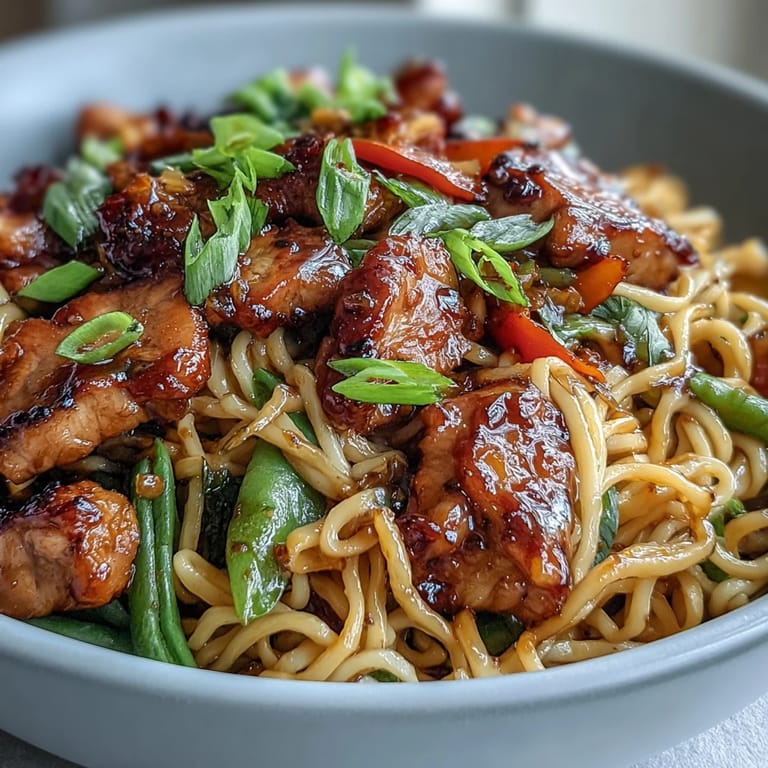
- Return the pork to the wok, add the cooked noodles and the sauce, and toss everything together for 2 to 3 minutes. The noodles should be glossy and every ingredient well coated.
- Finish and serve:
- Toss in the spring onions, give it one last stir, and remove from heat. Serve immediately, topped with sesame seeds, coriander, or sliced chili if you like.
 Save
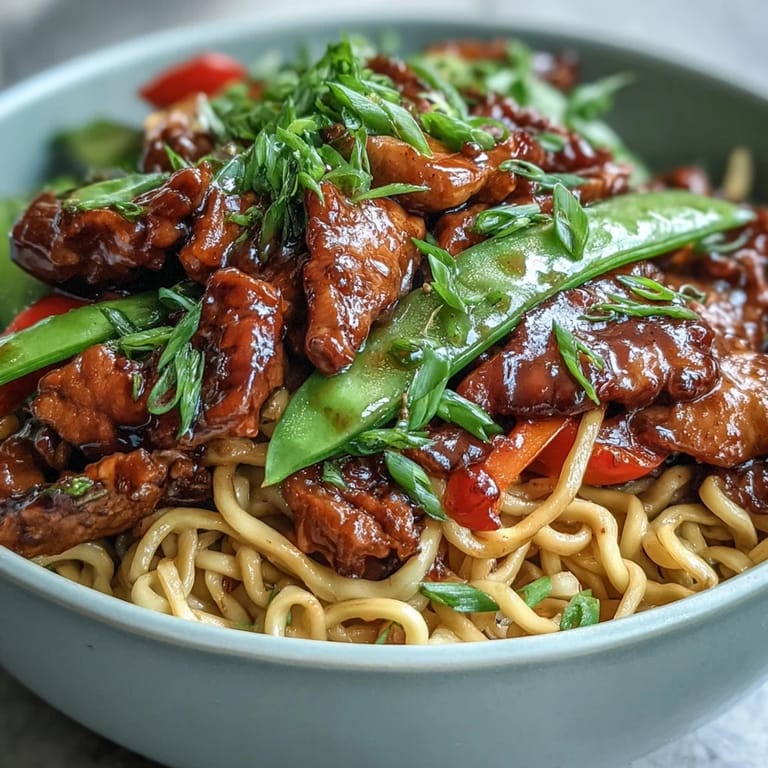
Save One night I made this for a friend who swore she hated cooking, and halfway through she was standing next to me at the stove, tossing noodles with a wooden spoon and grinning. She said it felt less like following a recipe and more like playing with fire and flavor. That is exactly what a good stir-fry should feel like.
Choosing Your Noodles
Egg noodles have a springy chew that works beautifully with the sauce, but rice noodles are lighter and soak up flavor in a different way. I have used both depending on what is in the pantry, and honestly, both work. If you are using dried noodles, slightly undercook them because they will finish cooking in the wok. Fresh noodles need even less time and can go straight into the stir-fry after a quick rinse.
Making It Your Own
This recipe is forgiving and adapts to whatever you have on hand. Swap the pork for chicken thighs, shrimp, or even crispy tofu if you want to change it up. I have added mushrooms, baby corn, and bok choy when I had them, and each time it tasted like a completely different meal. The sauce stays the same, but the vegetables and protein can shift with the season or your mood.
Storing and Reheating
Leftovers keep well in the fridge for up to three days, though the noodles will soak up more sauce as they sit. When reheating, add a splash of water or a drizzle of soy sauce to loosen everything up, and use a hot skillet instead of the microwave if you can. The noodles will crisp up a little on the edges, which is honestly a happy accident.
- Store in an airtight container to prevent the noodles from drying out.
- Reheat in a wok or skillet over medium-high heat for the best texture.
- Add fresh spring onions or coriander after reheating to brighten it up again.
 Save
Save This dish has pulled me out of more weeknight slumps than I can count, and it never feels like a compromise. It is fast, flexible, and always tastes like something worth sitting down for.
Recipe FAQs
- → Can I use different proteins instead of pork?
Yes, chicken breast, firm tofu, shrimp, or beef all work wonderfully in this stir-fry. Adjust cooking times accordingly—shrimp cooks faster while beef may need slightly longer.
- → What type of noodles work best for this dish?
Egg noodles or rice noodles both work perfectly. Fresh noodles give the best texture, but dried noodles are convenient and delicious when cooked according to package directions.
- → How do I prevent the vegetables from becoming soggy?
Cook over high heat and keep the vegetables moving in the wok. Don't overcrowd the pan, and stir-fry just until tender-crisp, about 3-4 minutes, to maintain their crunch.
- → Can I make this dish ahead of time?
While best served immediately, you can prep all ingredients ahead. Cook just before serving for optimal texture, as noodles tend to absorb sauce and soften when stored.
- → How can I make this gluten-free?
Substitute tamari for soy sauce, use rice noodles, and choose a gluten-free oyster sauce or mushroom sauce alternative. Always verify labels to ensure products are certified gluten-free.
- → What vegetables can I add or substitute?
Bok choy, mushrooms, baby corn, broccoli, or snow peas all make excellent additions or substitutions. Choose vegetables that cook quickly and maintain texture under high heat.