 Save
Save Last winter, a friend mentioned she'd been living on shirataki noodles and bone broth between intermittent fasting windows, and honestly, I was skeptical until she made me a bowl at her place. The steam rose off the broth carrying ginger and garlic, and something about the simplicity of it—just noodles in warm, nourishing liquid—felt like the opposite of deprivation. I went home and started experimenting, tweaking the aromatics until I found the balance that made me actually look forward to lunch instead of just tolerating it.
I made this for my partner on a gray Tuesday evening when neither of us had the energy to cook anything complicated, and watching him go back for seconds surprised us both. The broth had become something deeper than the sum of its parts, infused with ginger spice and that subtle sesame warmth, and the shirataki noodles—which I'd been convinced would taste like plastic—had absorbed the flavor beautifully. It became our quiet ritual that winter, especially on nights when we wanted nourishment without the dishes piling up.
Ingredients
- Bone broth (4 cups): The foundation of everything here—use the best quality you can find or make your own because the broth does most of the heavy lifting, and skimping shows immediately in the final bowl.
- Fresh ginger (1 thumb-sized piece, sliced): Don't peel it, just whack it gently with the side of your knife to crack it open so the oils release more readily into the broth.
- Garlic (2 cloves, smashed): Smash it properly so the cloves split and you can almost smell the moment they hit the hot broth; that's when you know they're releasing their essence.
- Soy sauce or tamari (2 tablespoons): Tamari if you're avoiding gluten, but honestly the difference in depth of flavor between quality soy sauce and the cheap stuff is worth noting—this is where the umami lives.
- Rice vinegar (1 tablespoon): A small amount brightens the broth without making it sour; it's the secret that keeps everything from feeling heavy.
- Sesame oil (1 teaspoon): Just a touch, because sesame oil is loud and aggressive in the best way—too much and it overpowers, too little and you miss the toasted aromatics entirely.
- Shirataki noodles (400g, drained and rinsed): These need serious rinsing, and I mean serious; boiling water poured directly over them helps strip away that slight rubbery smell that makes people nervous the first time.
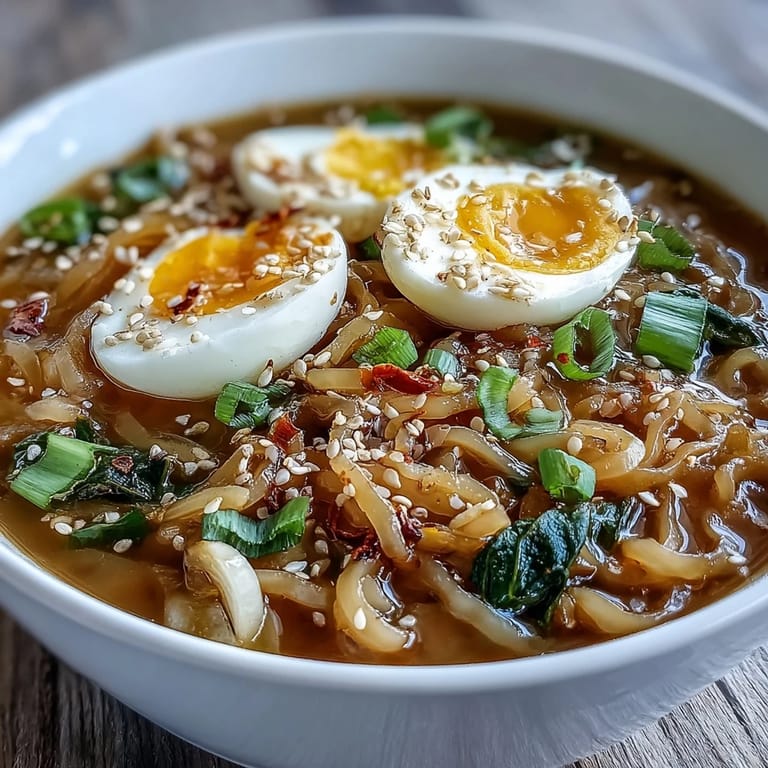
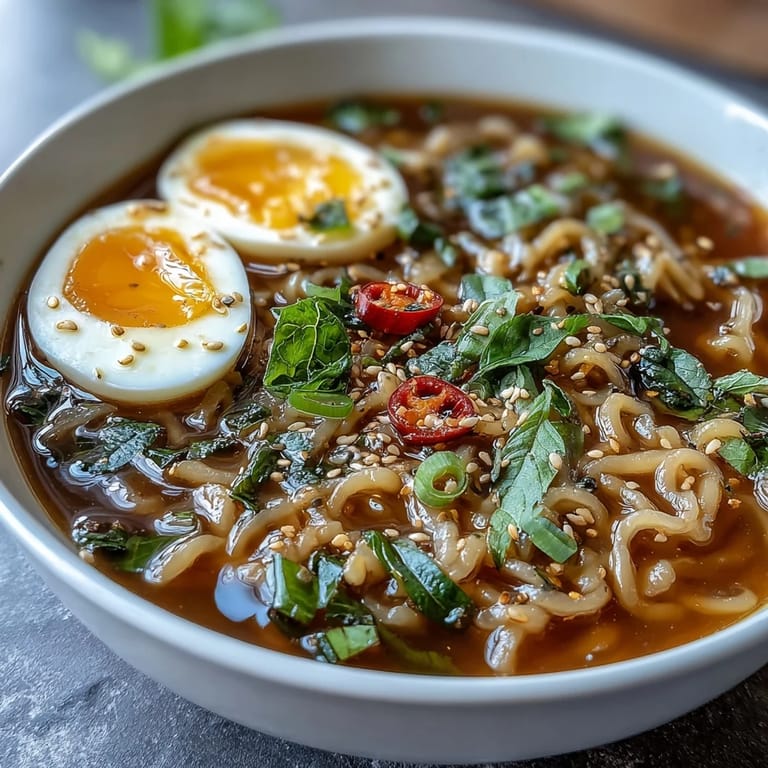
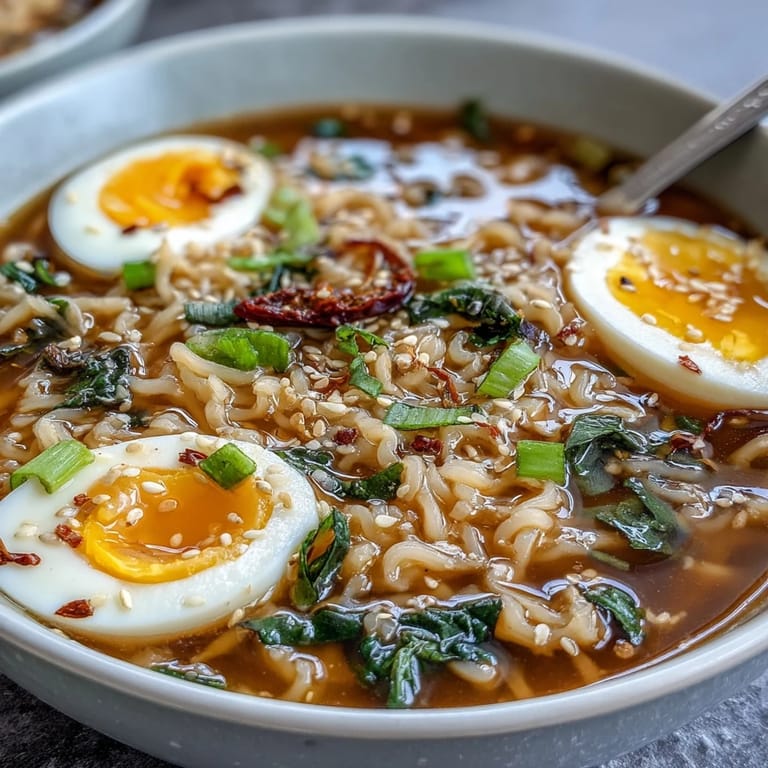
- Soft-boiled eggs (2, halved): Optional but honestly the creamy yolk mixing into the broth is the moment this stops feeling like a diet meal and feels like actual food.
- Spring onion, red chili, fresh herbs, sesame seeds: These toppings aren't decoration—they're texture and brightness that transform a simple bowl into something with personality.
Tired of Takeout? 🥡
Get 10 meals you can make faster than delivery arrives. Seriously.
One email. No spam. Unsubscribe anytime.
Instructions
- Build the broth base:
- Combine your bone broth, sliced ginger, smashed garlic, soy sauce, rice vinegar, and sesame oil in a medium pot over medium heat. Bring it to a gentle boil—you'll notice the aromatics starting to dance in the liquid almost immediately, filling your kitchen with that warm, spiced scent that makes you want to stay in the kitchen.
- Let the flavors marry:
- Reduce the heat and let it simmer quietly for 10 minutes without rushing; this infusion time is what separates a bowl of hot broth from actual comfort in a cup. Resist the urge to taste it constantly—just listen to it gently bubble and trust the process.
- Prepare the noodles:
- While the broth is working, drain your shirataki noodles and rinse them thoroughly under cold water, then place them in a sieve. Pour boiling water directly over them to warm them through and finalize the removal of any lingering odor—this step genuinely matters and makes a difference in the final dish.
- Combine noodles and broth:
- Add the prepared noodles to your simmering broth and let them warm through for 2 to 3 minutes; they'll soften slightly and absorb the flavors. The broth should feel welcoming and warm, not aggressive or rolling—you're gently heating, not agitating.
- Finish the base:
- Fish out those ginger slices and garlic cloves now—they've given what they came to give, and leaving them in makes the broth muddy and overly intense. A quick fish with a spoon or small strainer does the trick.
- Serve and garnish:
- Divide the noodles and broth evenly between two bowls, then crown each with whatever toppings call to you in that moment. The soft-boiled egg is where the magic happens—crack it gently so that golden yolk can swirl into the broth and create something richer with every spoonful.
 Save
Save There was a moment when my mom, who's usually skeptical about anything trendy or keto-adjacent, tried this and asked for the recipe without sarcasm. She started making it for herself on nights when she wanted something gentle on her stomach but filling enough to feel like an actual meal, and somehow that endorsement shifted how I thought about it—less as a diet hack and more as genuine kitchen wisdom passed between generations in a different form.
Why Shirataki Became My Secret Weapon
Before this, I thought shirataki noodles were just for people white-knuckling their way through a diet, but they're actually remarkable when treated with respect and paired with something flavorful enough to matter. They absorb broth like a dream, take on whatever aromatics you give them, and honestly disappear into the background so your focus stays on that restorative bone broth warmth. The zero-carb thing became almost irrelevant once I realized how satisfying this actually was.
The Broth Makes Everything
I've made this with mediocre store-bought broth and with homemade broth that had been simmering for 24 hours, and the difference is night and day. A good bone broth brings gelatin and deep mineral notes that make your body feel genuinely nourished, not just calorie-controlled; it's the difference between eating a meal and feeling like you actually fed yourself something worthwhile. If you ever make your own broth, this is the recipe that justifies the effort.
Timing, Temperature, and Small Victories
The beauty of this recipe is that it genuinely takes 25 minutes from fridge to bowl, which means you can make it on a weeknight without complicated planning or skill. The gentle simmering means nothing burns, nothing requires constant attention, and everything feels intentional rather than rushed. It's one of those rare dishes where taking your time actually makes it better, not just longer.
- If you're avoiding eggs, a soft cube of silken tofu or some shredded cooked chicken works equally well and adds different textures.
- Make extra broth and freeze it in portions so you can make this on random Tuesday nights without the prep work.
- Fresh herbs and chili aren't optional in my opinion—they're what prevent this from tasting austere or medicinal, even though it's technically a healing bowl.
 Save
Save This became less about the diet mechanics and more about finding a way to make myself a bowl that tastes like someone who actually loves me made it. There's something unexpectedly generous about taking 25 minutes to simmer aromatics and build warmth, even if it's just for yourself.
Recipe FAQs
- → How do I prepare shirataki noodles to remove the odor?
Drain and thoroughly rinse the noodles under cold water, then place them in a sieve and pour boiling water over them. This removes any natural odor and prepares them to absorb the flavorful broth.
- → Can I make this dish vegetarian?
Yes, substitute the bone broth with a rich vegetable broth and either omit the eggs or use tofu as a protein topping. Coconut aminos can replace soy sauce for a soy-free version.
- → What protein additions work well with this dish?
Shredded cooked chicken, tofu, or soft-boiled eggs make excellent protein additions. Simply add them when assembling the bowls, allowing the hot broth to warm them through.
- → How long should I simmer the broth for optimal flavor?
Simmer the broth with ginger, garlic, and seasonings for about 10 minutes after bringing it to a gentle boil. This allows the aromatics to infuse properly without becoming overly intense.
- → Can I store leftovers and reheat later?
Yes, store the noodles and broth separately in airtight containers in the refrigerator for up to 2 days. Reheat the broth gently and add the noodles just before serving to prevent them from becoming mushy.
- → What other toppings can I add for variety?
Beyond the suggested toppings, try sautéed mushrooms, blanched bok choy, nori sheets, pickled ginger, chili oil, or bean sprouts for added texture and flavor complexity.