 Save
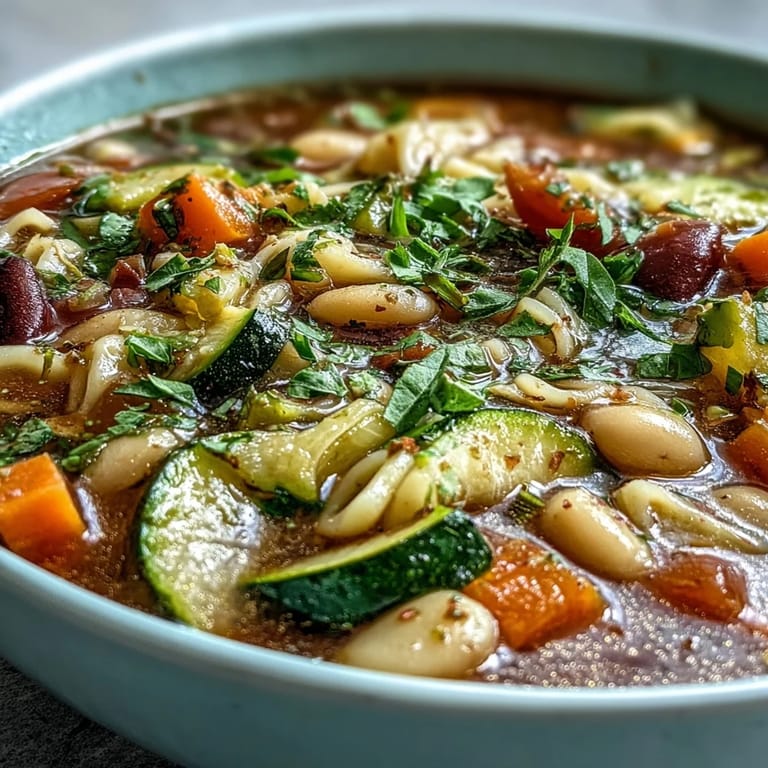
Save There's something about the smell of soffritto hitting hot oil that makes me pause whatever I'm doing. One autumn afternoon, I had a pile of vegetables that needed using before the weekend, and instead of overthinking it, I threw together this minestrone with whatever was in the crisper drawer. My neighbor stopped by midway through simmering and asked what smelled so good, and suddenly the soup felt less like meal prep and more like an invitation. That's when I realized minestrone isn't really a recipe so much as a permission slip to cook with the seasons.
I made this for my sister when she was recovering from the flu, and she later told me it was the first meal that felt like actual food and not just something to get down. There's real power in a bowl of soup that's warm and gentle but doesn't feel like you're eating something bland or punishing. She still texts me in winter asking if I've made my minestrone yet.
Ingredients
- Olive oil: Use a quality oil here since it carries flavor into the very first seconds of cooking, setting the whole tone.
- Onion, carrots, celery: This holy trinity is non-negotiable, the aromatic foundation that makes everything taste intentional and developed.
- Zucchini or butternut squash: Swap based on what's calling you from the produce section, summer brightness or winter earthiness.
- Green beans, kale, or spinach: Whatever green vegetable makes sense for the season adds both nutrition and a visual note that says you care.
- Garlic: Mince it fine and let it cook just until fragrant, not brown, or it turns bitter and sulky.
- Diced tomatoes: Canned are perfect here because they've already broken down and their juice is flavor gold.
- Vegetable broth: Choose one you'd actually drink on its own, since it's the liquid backbone of everything.
- Cannellini or borlotti beans: Drain and rinse them well to remove the starchy liquid that can cloud the broth.
- Small pasta: Ditalini and elbow shapes work best because they don't overpower the soup or sink into oblivion.
- Bay leaf, oregano, basil: Dried herbs work perfectly here because the long simmering coaxes out their essential oils.
- Fresh parsley: Save this for the end so it stays bright green and doesn't lose its fresh character to the heat.
- Parmesan cheese: Optional but transforms a good soup into one that makes people lean back and smile.
Tired of Takeout? 🥡
Get 10 meals you can make faster than delivery arrives. Seriously.
One email. No spam. Unsubscribe anytime.
Instructions
- Build Your Base:
- Heat the olive oil over medium heat and add your onion, carrots, and celery all together. Let them soften for about five minutes, stirring occasionally so they cook evenly and the kitchen fills with that smell that makes you feel like a real cook.
- Add Depth:
- Stir in the minced garlic along with your chosen seasonal vegetable, cooking for just three minutes until the garlic releases its perfume. You'll notice the aroma shifts from sweet to savory and more complex.
- Build the Liquid Base:
- Add the diced tomatoes and potato if you're using one, let it all cook together for a couple of minutes so flavors start holding hands. Then pour in your vegetable broth and toss in the bay leaf.
- Simmer and Develop:
- Bring everything to a boil, then reduce the heat and let it simmer gently for fifteen minutes so the vegetables soften and flavors deepen. Taste the broth at this point and you'll notice it's already become something more interesting than it was.
- Finish Strong:
- Add your drained beans and pasta, stirring well, and simmer uncovered for ten to twelve minutes until the pasta is tender and the beans have warmed through. The soup will thicken slightly as the pasta releases its starch.
- Season with Intention:
- Stir in the oregano, basil, salt, and pepper to taste, then fish out the bay leaf. Taste again and adjust seasonings because this is your moment to make it exactly right.
- Finish and Serve:
- Stir in the fresh parsley so it stays bright, then ladle into bowls. Top with Parmesan if you'd like that salty, umami note that makes people ask for seconds.
 Save
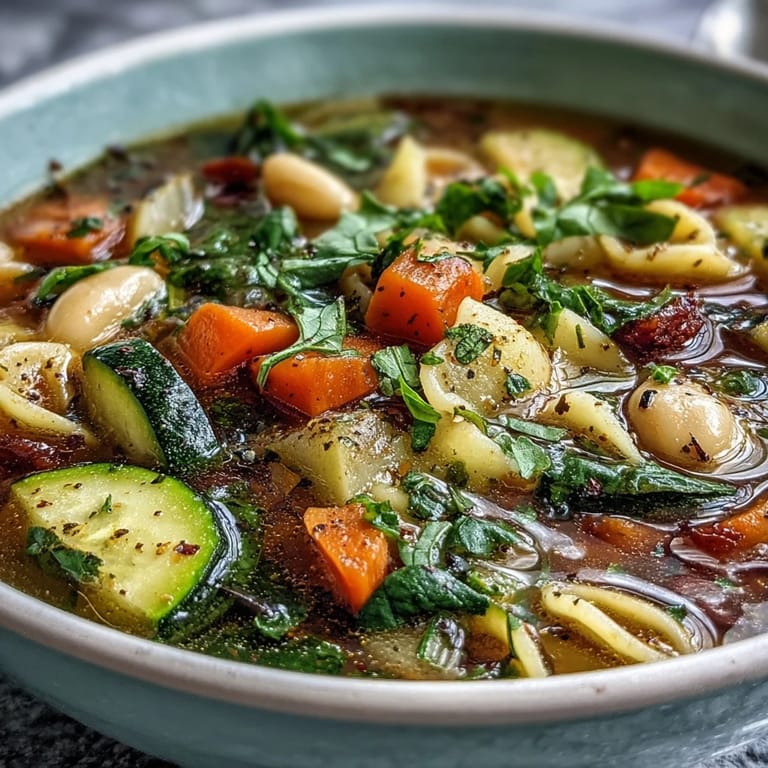
Save A friend who usually orders takeout made this for their partner's birthday dinner and texted me later saying they couldn't believe they'd made something that felt this intentional. Minestrone has this quiet power where it transforms the cook into someone who knows what they're doing, even on the first try.
Playing with Seasons
The magic of minestrone is that you're not locked into one version. Spring asks for peas, leeks, and fresh spinach that cook down to silken softness. Summer celebrates zucchini and green beans at their peak brightness. Fall welcomes butternut squash and kale with their deeper, earthier notes. Winter is when you bring out the savoy cabbage and root vegetables that have been waiting in storage. Once you make it a few times, you stop thinking of recipes as fixed and start thinking of them as conversations with whatever's in season.
The Parmesan Rind Secret
If you have a Parmesan rind hiding in your refrigerator, drop it into the soup while it simmers for the last twenty minutes or so. It dissolves partially and releases this concentrated umami note that makes people wonder what your secret is. You don't tell them it's basically just cheese trash transformed into liquid gold. Remove it before serving, obviously, but this one trick changes how people experience the soup.
Making It Work for Everyone
This soup adapts beautifully to dietary needs without feeling like a compromise. Skip the Parmesan for dairy-free, use gluten-free pasta for those who need it, and it's already vegetarian so no convincing needed there. The beauty is that everyone at the table gets something that tastes like it was made specifically for them, not like they're eating a modified version of someone else's meal.
- Make it vegan by using dairy-free cheese or skipping the cheese entirely and finishing with a drizzle of really good olive oil instead.
- Prep your vegetables ahead of time so on a busy day you can have soup ready in less than an hour from start to finish.
- Freeze portions in individual containers so you have a bowl of comfort waiting for whenever you need it most.
 Save
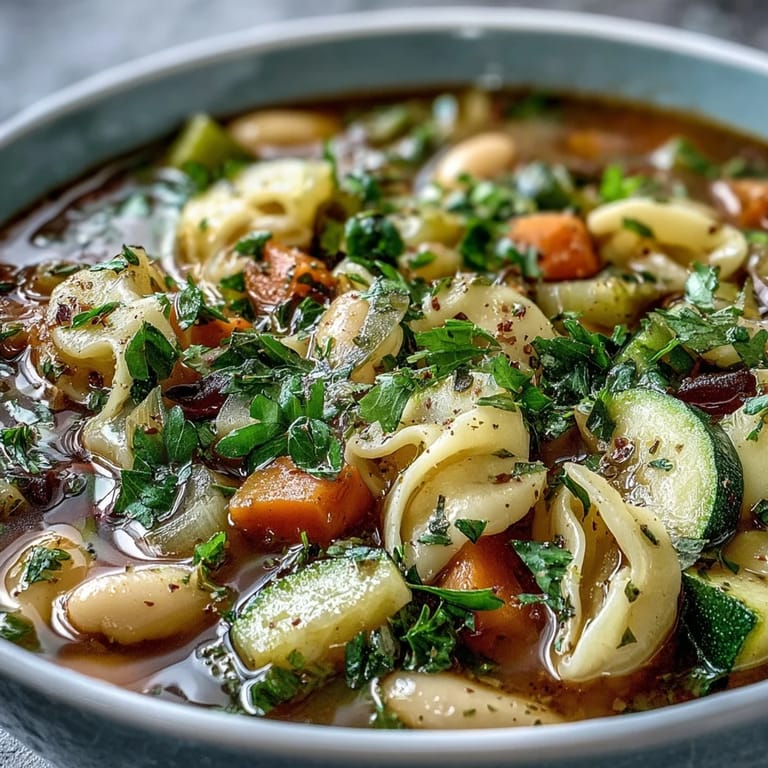
Save Minestrone taught me that good cooking doesn't require perfection, just attention and willingness to adapt. Make it once and it becomes yours, shaped by your seasons and what your body needs on any given day.
Recipe FAQs
- → Can I make this soup ahead of time?
Yes, minestrone tastes even better the next day as flavors meld. Store in the refrigerator for up to 4 days. Note that pasta may absorb liquid, so add extra broth when reheating if needed.
- → What vegetables work best in different seasons?
In summer, use zucchini, green beans, and fresh tomatoes. For winter, substitute butternut squash, kale, and savoy cabbage. Spring variations can include peas, asparagus, and leeks for a lighter version.
- → Can I freeze vegetable minestrone?
Yes, but it's best to freeze without the pasta, as pasta can become mushy when thawed. Freeze the soup base for up to 3 months, then add freshly cooked pasta when reheating.
- → How do I make this soup more filling?
Increase the pasta amount, add extra beans, or include diced potatoes. You can also serve with crusty bread or add a swirl of pesto on top for added richness and protein.
- → What's the best way to enhance the flavor?
Add a Parmesan rind while simmering for depth, use high-quality olive oil for drizzling, and finish with fresh herbs. A splash of red wine when sautéing vegetables also adds complexity.
- → Can I use dried beans instead of canned?
Absolutely. Soak 200g dried beans overnight, then cook until tender before adding to the soup. This takes longer but offers better texture and flavor control.