 Save
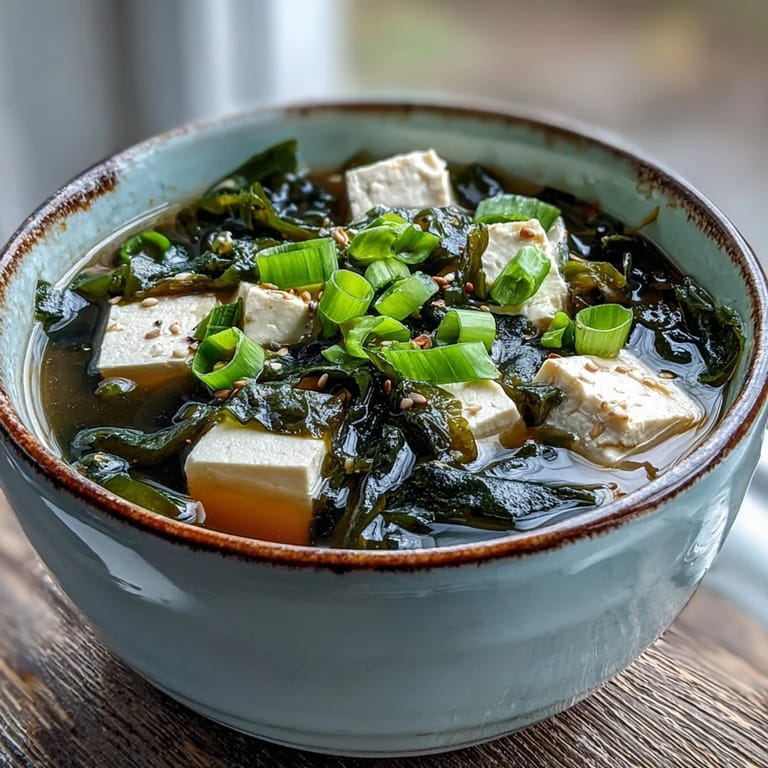
Save My neighbor brought over a small container of homemade dashi one winter afternoon, and I'd never made Japanese soup before. She casually mentioned that wakame was the easiest way to turn simple broth into something nourishing, and twenty minutes later I had a steaming bowl that tasted like I'd been cooking Japanese food my whole life. That moment taught me that some of the most elegant dishes are built on restraint rather than complexity.
I made this soup on a quiet Tuesday evening when I was tired and craving something warm but not heavy. My roommate wandered into the kitchen drawn by the smell of dashi, and within minutes she was sitting at the counter with a bowl, asking for the recipe before she'd even finished eating it. That's when I realized this soup had become something I'd make regularly, not because it was impressive, but because it just made sense.
Ingredients
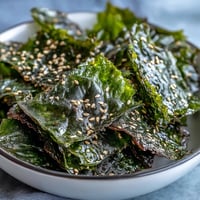
- Dried wakame seaweed: These delicate green fronds rehydrate into something tender and mineral-rich that tastes nothing like the seaweed you might be imagining. Buy it from the Asian section or online, and don't be tempted to skip soaking it unless you want chewy surprises.
- Dashi stock: This is your foundation, and while making it from scratch is rewarding, a quality prepared dashi or even dashi powder will give you authentic results without the extra step. The umami here is what makes people pause mid-spoon and ask what you did differently.
- Silken or firm tofu: Silken tofu gives you that silky, almost disappearing quality, while firm tofu holds its shape better if you prefer texture. Either one works beautifully, so choose based on how you like the tofu to feel in your mouth.
- Scallions: These finish the soup with brightness and a gentle onion note that cuts through the richness of the broth. Slice them thin just before serving so they stay crisp.
- White miso paste: This is the secret umami boost that transforms broth into soup with actual soul. Never boil it directly, or you'll lose the living cultures and the delicate flavor will turn harsh.
- Soy sauce: A small splash adds another layer of savory depth without overwhelming the delicate broth. Taste as you go because you can always add more.
- Sesame oil: This is optional but worth including if you have it, as a whisper of it adds warmth and complexity that lingers after you swallow.
Tired of Takeout? 🥡
Get 10 meals you can make faster than delivery arrives. Seriously.
One email. No spam. Unsubscribe anytime.
Instructions
- Wake up the wakame:
- Place your dried wakame in a small bowl and cover it with cold water, then set it aside. In just 5 minutes you'll watch it transform into tender ribbons that release an oceanic aroma.
- Heat the dashi gently:
- Pour your dashi into a medium saucepan and bring it to a gentle simmer over medium heat. You want to see small bubbles occasionally breaking the surface, not a rolling boil that will agitate the delicate ingredients.
- Add tofu and wakame:
- Drain your rehydrated wakame and add it to the pot along with your cubed tofu. Let everything simmer together for 2 to 3 minutes, just enough time for the flavors to whisper hello to each other.
- Marry the miso:
- In a separate small bowl, scoop out a ladle of the hot broth and whisk it together with your miso paste until it's completely smooth and creamy. This prevents lumpy miso from hiding in your finished soup.
- Stir gently into the pot:
- Pour your silky miso mixture back into the soup and stir it through completely, letting the warmth distribute the salty umami throughout. This is when the kitchen smells like a proper Japanese kitchen.
- Season and finish:
- Add soy sauce and sesame oil if you're using it, then heat for one more minute without letting it boil. Taste it and adjust seasonings if needed, then pour it into bowls while it's still steaming.
- Garnish and serve:
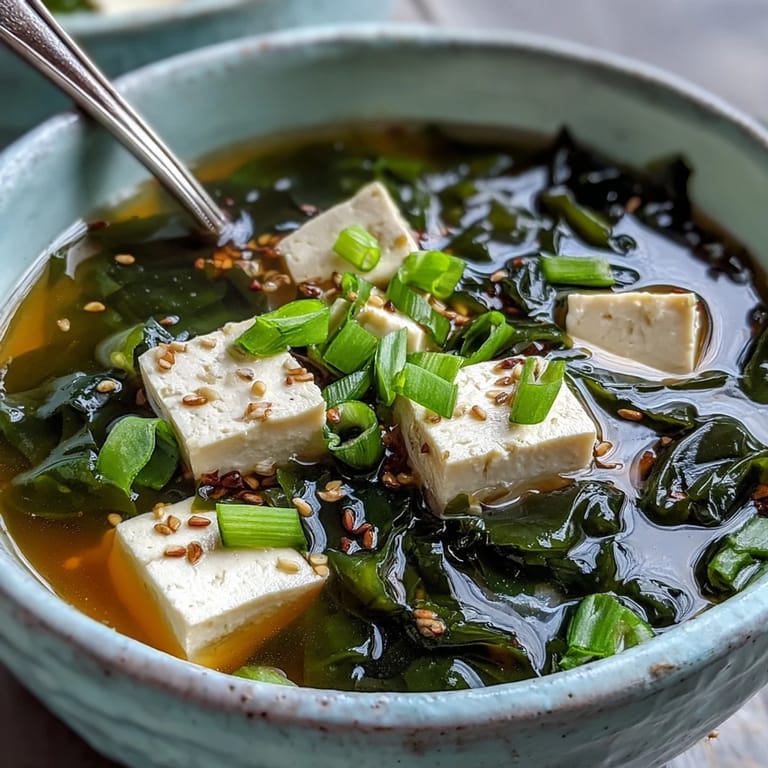
- Top each bowl with your freshly sliced scallions and serve immediately. The scallions stay bright and slightly crisp, contrasting beautifully with the soft elements below.
 Save
Save Once I started making this soup regularly, it became my go-to when someone at work mentioned they weren't feeling well or when I needed to show up with something nourishing. It sits in that perfect space between simple enough to make on a weeknight and special enough that people feel cared for when you set it in front of them.
The Story Behind Wakame
Wakame has been woven into Japanese cooking for centuries, and there's something humbling about cooking with an ingredient that connects you to that history. The Japanese understood something about minerals and ocean nutrition long before we had lab tests to prove it, and eating this soup always feels like you're tapping into that ancient wisdom. It's the kind of ingredient that makes simple food feel profound.
Building Your Own Dashi
If you want to deepen your connection to this soup, learning to make dashi from kombu and bonito flakes opens up a whole world of Japanese cooking. You'll need just two ingredients and about 15 minutes, and the fragrance that fills your kitchen is worth the effort alone. For a vegan version, kombu and dried shiitake mushrooms create a dashi that's just as flavorful and utterly satisfying.
Variations That Honor the Original
Once you've made this soup a few times and it feels natural in your hands, you can play gently with it. Add thin slices of mushroom, a handful of fresh spinach, or delicate carrot ribbons without losing the soul of the dish. The base is so well-balanced that thoughtful additions only amplify rather than overshadow.
- Mushrooms add earthiness while maintaining the soup's light character.
- Spinach or other greens contribute additional minerals and a visual brightness that makes the soup feel more complete.
- Keep your additions minimal so the wakame and dashi remain the stars of the show.
 Save
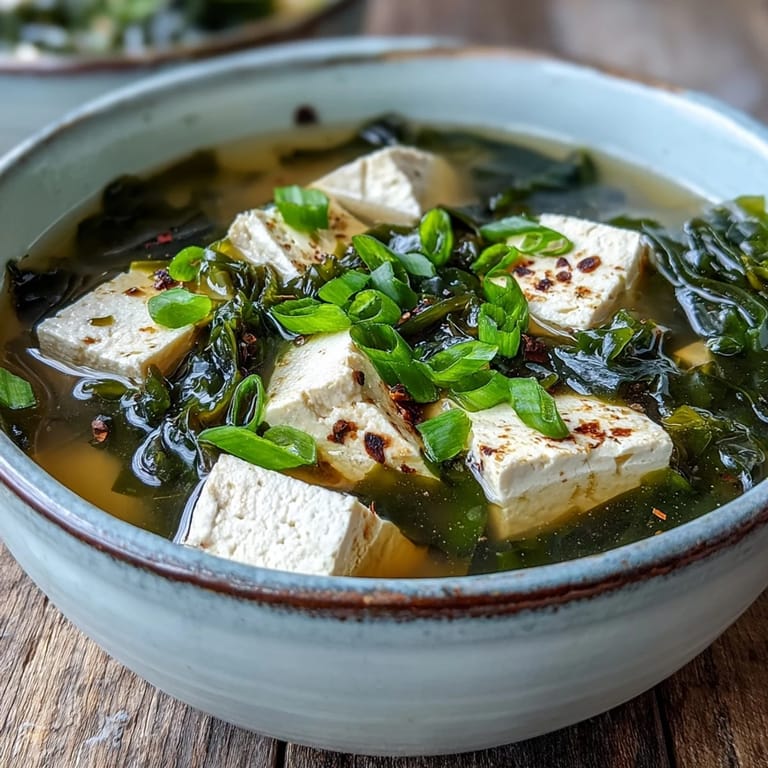
Save This soup has become my quiet comfort, the thing I make when I want to feel grounded and nourished. It reminds me that some of the most beautiful meals ask very little of you but give back everything.
Recipe FAQs
- → What does wakame taste like?
Wakame has a mild, slightly sweet flavor with a pleasant ocean-like brininess. When rehydrated, it becomes tender and silky, absorbing the flavors of the dashi broth while contributing a subtle umami richness to the soup.
- → Can I use instant dashi instead of homemade?
Yes, instant dashi powder works well for this preparation. Dissolve it in hot water according to package instructions. For vegetarian versions, look for kombu-based dashi powder or granules that don't contain bonito flakes.
- → Why shouldn't the soup boil after adding miso?
Boiling miso paste destroys its beneficial enzymes and probiotics, while also creating a grainy texture. The miso should be dissolved in a small amount of hot broth first, then stirred in at the end with gentle heat just until warmed through.
- → What can I add to make this more filling?
Consider adding sliced mushrooms, diced carrots, baby spinach, or cooked udon noodles. A soft-boiled egg or extra tofu also increases protein. For a heartier version, serve over steamed rice as a donburi-style bowl.
- → How long does this soup keep in the refrigerator?
This soup is best enjoyed fresh, but leftovers can be refrigerated for up to 2 days. Reheat gently over low heat without boiling. The tofu and seaweed may soften further, and the miso flavor will continue to develop.
- → Is wakame the same as nori?
No, they are different seaweeds. Wakame is a brown kelp that becomes tender when rehydrated and is commonly used in soups and salads. Nori is a red algae that's dried into sheets for sushi rolls and has a crisp, papery texture.